Sunday, February 13, 2011

Maya - The lost civilization ( II )

Maya had a complex society (Classic period 300 - 900 AD)


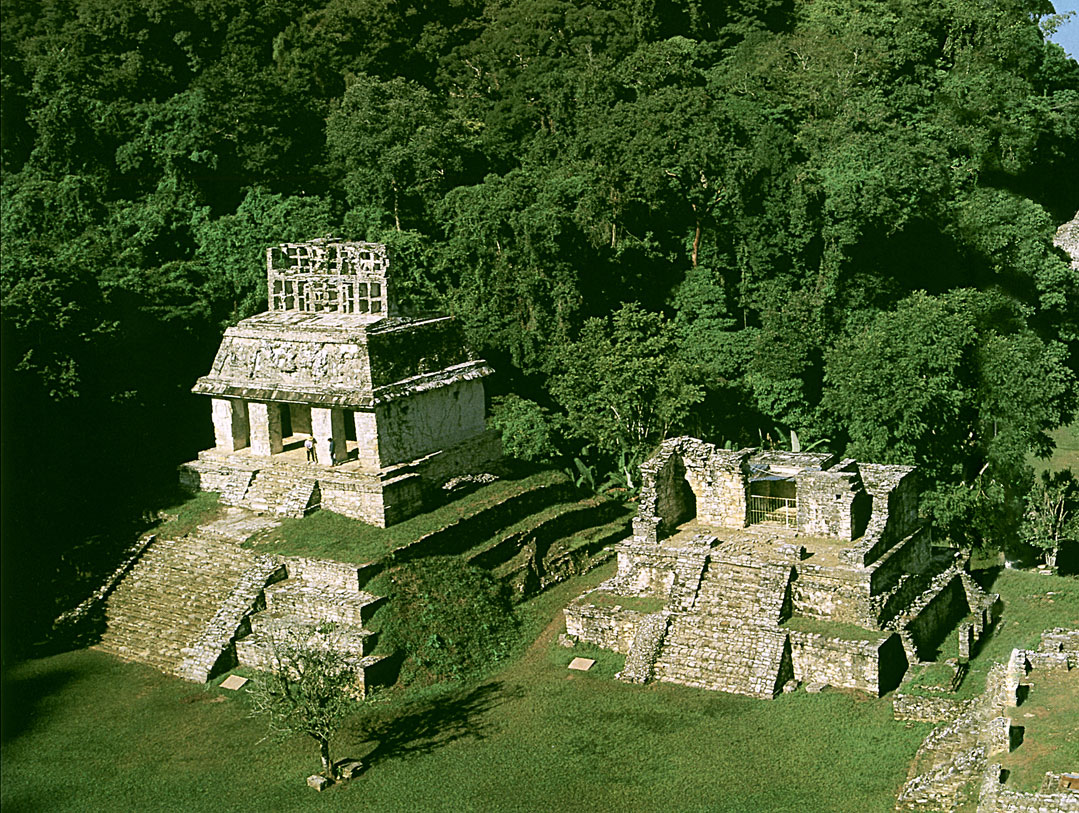
Most artistic and cultural achievement came about during the Classic period 300 - 900 AD. The Maya developed a complex, hierarchical society divided into classes and professions. Centralized governments, headed by a king, ruled territories with clearly defined boundaries. These borders changed as the various states lost and gained control over territory. Mayan centers flourished in Mexico, Guatemala, Belize, Honduras, and El Salvador. The major cities of the Classic period were Tikal (Guatemala), Palenque and Yaxchilan (Chiapas, Mexico), Cop n and Quirigua (Honduras). For most of this period, the majority of the Maya population lived in the central lowlands of Mexico and Belize. The Northern Yucatan (where present day Cancun is located) was sparsely populated for most of the Classic period with only a few cities such as Dzibilchaltun (near M rida) and Xpuhil, Bec n and Chicann (near Chetumal). During the 9th century the population centers of the central lowlands declined significantly. This decline was very rapid and is attributed to famine, drought, breakdowns in trade, and political fragmentation. Fragmentation from large states into smaller city-states focused resources on rivalries between cities including not just wars, but competitions of architecture and art between rival cities. As the cities in the lowlands declined, urban centers sprung up in the Northern Yucatan, including Uxmal (near M rida).
Anthropologists used to contrast the "peaceful" Maya with the bloodthirsty Aztecs of central Mexico. Although human sacrifice was not as important to the Maya as to the Aztec, blood sacrifice played a major role in their religion. Individuals offered up their blood, but not necessarily their lives, to the gods through painful methods using sharp instruments such as sting-ray spines or performed ritualistic self mutilation. It is probable that people of all classes shed their blood during religious rites. The king's blood sacrifice was the most valuable and took place more frequently. The Maya were warlike and raided their neighbors for land, citizens, and captives. Some captives were subjected to the double sacrifice where the victims heart was torn out for the sun and head cut off to pour blood out for the earth.
The Mayan civilization was the height of pre-Columbian culture. They made significant discoveries in science, including the use of the zero in mathematics. Their writing was the only in America capable of expressing all types of thought. Glyphs either represent syllables or whole concepts and were written on long strips of paper or carved and painted on stone. They are arranged to be red from left to right and top to bottom in pairs of columns. The Mayan calendar begins around 3114 BC, before Maya culture existed, and could measure time well into the future. They wrote detailed histories and used their calendar to predict the future and astrological events. Fray Diego de Landa, second bishop of the Yucat n ordered a mass destruction of Mayan books in 1562 and only three survived.

Friday, February 11, 2011

Maya - The lost civilization ( I )

The Maya are probably the best-known of the classical civilizations of Mesoamerica. Mayan history starts in the Yucatan around 2600 B.C., Mayan history rose to prominence around A.D. 250 in present-day southern Mexico, Guatemala, western Honduras, El Salvador, and northern Belize.
Building on the inherited inventions and ideas of earlier civilizations such as the Olmec, the Maya developed astronomy, calendrical systems and hieroglyphic writing. The Maya were noted as well for elaborate and highly decorated ceremonial architecture, including temple-pyramids, palaces and observatories, all built without metal tools. Mayan history shows that they were also skilled farmers, clearing large sections of tropical rain forest and, where groundwater was scarce, building sizeable underground reservoirs for the storage of rainwater. The Maya were equally skilled as weavers and potters, and cleared routes through jungles and swamps to foster extensive trade networks with distant peoples.
Many people believe that the ancestors of the Maya crossed the Bering Strait at least 20,000 years ago. They were nomadic hunter-gatherers. Evidence of settled habitation in Mexico is found in the Archaic period 5000-1500 BC - corn cultivation, basic pottery and stone tools.
The first true civilization was established with the rise of the Olmecs in the Pre-Classic period 1500 BC -300 AD. The Olmecs settled on the Gulf Coast, and little is known about them.
They are regarded as the inventors of many aspects of Meso-American cultures including the first calendar and hieroglyphic writing in the Western hemisphere. Archeologists have not settled the relationship between the Olmecs and the Maya, and it is a mystery whether the Maya were their descendants, trading partners, or had another relationship, that is white place in Mayan history.
It is agreed that the Maya developed a complex calendar and the most elaborate form of hieroglyphics in America, both based on the Olmec's versions.

Monday, February 07, 2011

The Croatoans and The Missing Roanoke Colony (II)


Missing Roanoke Island Colonists

Landing at Roanoke on August 18, 1590, White found the settlement deserted. The houses and fortifications had been dismantled in an orderly manner. The only clue was the word "Croatoan" carved into a post of the fort and "Cro" carved into a nearby tree. As there was no cross, White assumed they’d moved to Croatoan Island, but violent weather forced him to abort a search and the privateers refused to stay any longer – it was hurricane season. White was forced to return to Plymouth without a chance to so much as question the neighboring Croatoans.
In 1607, the Jamestown Colony sought information about the fate of the Roanoke Island colonists. One report indicated they took refuge with friendly Chesapeake Indians, but Chief Powhatan (a powerful Virginian tribal chief), claimed his warriors had attacked and killed most of the Roanoke colonists. Powhatan showed artifacts he claimed belonged to the colonists, including a musket barrel and a brass mortar.
In 1609, the Jamestown Colony received reports of English captives and sent search parties to no avail. Then in 1612, William Strachey, a secretary of the colony, wrote of Indian settlements at Peccarecanick and Ochanahoen having two-story houses with stone walls, a housing he was sure the lost Roanoke colonists had shown them.

Roanoke Colony Theories

Historian Lee Miller believes the Roanoke colonists were sold by a Wainoke tribe into slavery. Others believe the survivors were absorbed into the Croatoan tribe. Sadly, the most obvious fates cannot be ruled out - massacre or starvation though no bodies have been found.
In the late 1990s a group of climate researchers concluded the Roanoke colony had been established during the worst drought in more than 300 years.

Sunday, February 06, 2011

The Croatoans and the Missing Roanoke Colony ( I )


Roanoke Island Chosen for Colonization

In 1584, Sir Walter Raleigh dispatched an expedition piloted by Simon Fernandez, a Portuguese pilot familiar with America’s eastern coast, in an attempt to find a suitable location to establish an English settlement. Roanoke Island of North Carolina was ultimately chosen. Roanoke Island, lying between the treacherous Outer Banks and the mainland, is characterized by abundant wildlife, marshlands and oaks.


First Roanoke Colony Effort

In the spring of 1585, Raleigh dispatched a host of mostly veteran soldiers to begin colonization of Roanoke. Ralph Lane and Richard Greenville led the expedition. While exploring the surrounding coast they accused natives in the village of Aquascogoc of stealing a silver cup. In retaliation, they sacked and burned the village, executing the tribal chief by fire.
The expedition landed on Roanoke Island on August 17, and shortly thereafter Greenville left Lane with about 75 men to establish the colony, promising to return by April 1586 with reinforcements and supplies. In June the settlers were inadvertently rescued by Sir Francis Drake and they left Roanoke Island to return to England. Greenville's ship arrived about two weeks later. Finding the Roanoke colony abandoned, he left behind fifteen men to protect Raleigh’s patent requiring continuous occupancy of the island.


Second Roanoke Colony Effort

In 1587, Raleigh dispatched a group of 117 colonists led by John White who’d served on the previous Roanoke Island expedition. Raleigh had since decided the Chesapeake Bay area would make a better location, and to recruit settlers he promised each 500 acres of land and involvement in the colony’s government. White brought 91 men, 17 women, and 9 children.
On July 22, the colonists disembarked at Roanoke Island expecting to find the fifteen men Greenville left behind the previous year. Instead they found the bones of only one man apparently killed by Indians. Lane’s fort was charred but the houses were intact. White noticed the Indians were more hostile than before. But Fernandez (the pilot of previous expeditions) had reportedly grown impatient and refused to guide them further. For whatever reason, they stayed on Roanoke Island. White successfully re-established relations with the neighboring Croatoans and tried unsuccessfully re-establishing relations with the tribes Lane had attacked.
Then a Roanoke colonist named George Howe was killed by natives. The Croatoans accused a neighboring tribe, saying they’d killed Greenville’s soldiers as well. On Aug 8, an attack was launched at the accused Indian settlement but the English attackers found only Croatoans who’d come to forage after the accused Indians fled.

On August 18, White’s daughter Eleanor gave birth to Virginia Dare, the first English child born in the Americas. Ananias Dare was a bricklayer in London before the expedition. Little else is known of him.
Fearing retaliation for Ralph Lane’s treatment of the natives, the Roanoke colonists persuaded White to return to England for help. They’d discussed moving the colony inland so a code was established; if they moved, they’d carve their new location in a conspicuous place. If under attack by either Spaniards or Indians they were to carve a Maltese cross.  

Saturday, February 05, 2011

Bermuda Triangle (Natural explanations)

Methane Hydrates
An explanation for some of the disappearances focuses on the presence of vast fields of methane hydrates on the continental shelves.
Periodic methane eruptions are capable of producing ship-sized bubbles, or regions of water with so much dissolved gas, that the fluid density is no longer capable of providing adequate buoyancy for ships to float. If this were the case, such an area forming around a ship could cause it to sink almost directly and without warning. Experiments have proven that a methane bubble can indeed sink a ship by decreasing the density of the water.
Methane gas can also crash planes. The less dense air causes planes to lose lift. Also, the altimeter of planes (the instrument that measures the altitude) functions on the density of air. Because methane is less dense, the altimeter assumes the plane is climbing. Planes at night or in the clouds, where they can't see the ground, assume that they are climbing and dive, causing them to crash. Also, methane in the engine throws off the mix of fuel and air. Aircraft engines burn hydrocarbons (gasoline or jet fuel) with oxygen provided by the air. When the ambient oxygen levels drop, combustion can stop, and the engine stalls. All of these effects of methane gas have been shown experimentally.
A white paper was published in 1981 by the United States Geological Survey about the appearance of hydrates in the Blake Ridge area, off the southeastern United States coast. However, according to a USGS web page, no large releases of gas hydrates are believed to have occurred in the Bermuda Triangle for the past 15,000 years.

Hurricanes
Hurricanes are extremely powerful storms which are spawned in the Atlantic near the equator, and have historically been responsible for thousands of lives lost and billions of dollars in damage. The sinking of Francisco de Bobadilla's Spanish fleet in 1502 was the first recorded instance of a destructive hurricane. In 1988, Hurricane Gilbert, one of the most powerful hurricanes in history, set back Jamaica's economy by three years. These storms have in the past caused a number of incidents related to the Triangle.


Gulf Stream
The Gulf Stream is an ocean current that originates in the Gulf of Mexico, and then through the Straits of Florida, into the North Atlantic. In essence, it is a river within an ocean, and like a river, it can and does carry floating objects. A small plane making a water landing or a boat having engine trouble will be carried away from its reported position by the current, as happened to the cabin cruiser Witchcraft on December 22, 1967, when it reported engine trouble near the Miami buoy marker one mile (1.6 km) from shore, but was not there when a Coast Guard cutter arrived.


Freak Waves
Extremely large waves can appear seemingly at random, even in calm seas. One such rogue wave caused the Ocean Ranger, then the world's largest offshore platform, to capsize in 1982. There is, however, no particular reason to believe rogue waves are more common in the Bermuda region, and this explanation cannot account for the loss of airplanes.
Research has shown that freak waves up to 30 m (100 feet) tall, capable of sinking the largest ships within moments, can and do happen. Although these are very rare, in some areas ocean currents mean they happen more often than the norm. Such waves have now been hypothesized as a cause for many unexplained shipping losses over the years.

Electronic Fog
Many people have reported seeing portals opening in cloudy skies - strange swirling lights sometimes accompanied by sounds - temporal distortions - electromagnetic distortions called 'electronic fog' that can cause a time storm, and the disappearance of planes and ships. There is something about this fog that is important and gives one the sense of all things paranormal. Something unexplained is definitely happening in that region of the Atlantic. This goes back to ancient explorers such as Christopher Columbus and his crew who experienced the phenomenon.