In the beginning, astrology and religion were very closely connected. Astronomy and astrology were the same science--the split came only during modern times when it became expedient for the Church to redirect attention toward dogma and the scientific schools were looking to elevate logical study of the heavens by displacing the current science, much the same way allopathic medicine has displaced naturopathic medicine. Long before recorded history, the stars, sun, moon, eclipses, etc., were studied by men who charted the heavens and helped their contemporaries to understand the events and goings-on as they endured and celebrated with the "as above, so below" philosophy that still does and always will prevail in astrological thought. Because of these attempts to harness the knowledge of the heavens, calenders were made possible. Eventually, the ancient star mappers were able to see the power each of the planets, the sun , the moon and even the eclipses had on people and nations here below. The sun, being the most powerful, correlates to the individual or nation as a representation of self, which is why sun sign astrology has become so popular.
Egyptian astrology
From about 3,000 BCE to 300 BCE, astrology and religion were synonymous in practice with the priests holding the knowledge of the heavens. The main focus of life in Egypt was the Nile River and it is not surprising that water is a basic imagery used in Egyptian astrology. The sky became a large river (a goddess named Nut) and the lesser gods crossed the sky-river in boats. From this came the custom of supplying deceased pharaohs, with all they would need to cross the great river. The Egyptians believed the sun god controlled the Nile River and made it possible for the Nile to flood its banks making agriculture possible. The moon and Venus held superior places also.
In the beginning, the Egyptians divided the sky into 36 sections. These 36 sections became what the Greek astrologers called the dekanoi (ten days apart) and come down to us in tact as the decanates, which we still use today. Later, the sky was divided into 12 sections and each section was given a name and assigned three stars. Each was given a boat to cross the sky river. There as a special deity or god for each month and each day of the year.
Individual chart forecasting using the date of birth was first developed by the Egyptians in the 5th century BCE. Until that time astrology was used, as in other cultures, to predict wide-scale common events like weather, war, famine and leadership issues.
This is a blog about people and things that can help understand world around us better sometimes. If is that so...let's find out togheter.
Showing posts with label Egyptian. Show all posts
Tuesday, February 22, 2011
Monday, February 21, 2011
Egyptians - The History of Cheops Pyramid
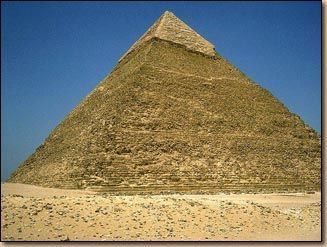
The Cheops Pyramid, which at 2005 is the largest and the oldest pyramid in the Giza Necropolis. It also is widely known as the Great Pyramid of Giza and the Pyramid of Khufu.
Built in 2560 BC it is of this date the oldest and largest pyramid in the Giza Necropolis. Bordering in what is now known as El Giza, the Cheops Pyramid is known to have been built within a 20 year period. For over 3,800 years the Great Pyramid is known to be the tallest man – made structure in the world. Originally it is covered by on outer core made of casing of stones that formed a smooth outer surface, today what visitors can see is only the inner core as time has already worn out the outer surface.
It is believed that the Cheops Pyramid was intended for the burial site of the fourth dynasty pharaoh Khufu. Estimated to have consists of about 2.3 million blocks it is a massive architectural feat.
Even for 3,800 years the Cheops Pyramid is the tallest man-made structure unsurpassed even by the construction of the Lincoln Cathedral which is 160 meter tall (including the spire) built in 1300. Not only that the accuracy of the Cheops Pyramid is an amazing workmanship that the four sides of the base have an average error of only 58 millimeters in length. This is again a testament of the detailed workmanship of the architects and workers during the ancient time.
Sunday, February 20, 2011
Egyptians - The origins
The name Egypt means "Two Lands," reflecting the two separate kingdoms of Upper and Lower prehistoric Egypt - Delta region in the north and a long length of sandstone and limestone in the south. In 3000 B.C., a single ruler, Menes, unified the entire land and set the stage for an impressive civilization that lasted 3,000 years. He began with the construction of basins to contain the flood water, digging canals and irrigation ditches to reclaim the marshy land. From these earliest of times, so important was the cutting of a dam that the event was heralded by a royal ceremony. King Menes is credited with diverting the course of the Nile to build the city of Memphis on the site where the great river had run. By 2500 B. C., an extensive system of dikes, canals and sluices had developed. It remained in use until the Roman occupation, 30 B.C. - 641 A.D
During the ancient Egyptian times, there was the ever so famous hieroglyphic, which was a writing system. Hieroglyphics are known for being the earliest writing system in the world. Until the introduction of Christianity, the Egyptian magicians and the Egyptian priests used spells and magic. In ancient Egypt, there have been a few changes that have been noticeable. For instance, 2580 BC was the Great Pyramid of Giza. Ancient Egypt is one of those times where you would just have to be there in order to fully grasp and understand the knowledge. No one living today is able to describe fully the civilization of ancient Egypt as it truly was. All we are able to do is go by the records that were left behind by the Egyptians and make our own comprehension out of them.
Subscribe to:
Posts (Atom)