Tuesday, February 15, 2011

Dracula - The Legend ( I )


Dracula – Beyond the Legend
» Bram Stoker’s inspiration
» Who was Vlad Dracula ?
“We Draculs have a right to be proud…
I am the last of my kind
”
 – Dracula, from Bram Stoker’s Dracula
Some say that Transylvania sits on one of Earth's strongest magnetic fields and its people have extra-sensory perception. Vampires are believed to hang around crossroads on St. George's Day, April 23, and the eve of St. Andrew, November 29. The area is also home to Bram Stoker's Dracula, and it's easy to get caught up in the tale while driving along winding roads through dense, dark, ancient forests and over mountain passes.Tales of the supernatural had been circulating in Romanian folklore for centuries when Irish writer Bram Stoker picked up the thread and spun it into a golden tale of ghoulishness that has never been out of print since its first publication in 1897. To research his immortal tale, Stoker immersed himself in the history, lore and legends of Transylvania, which he called a “whirlpool for the imagination.”Count Dracula, a fictional character in the Dracula novel, was inspired by one of the best-known figures of Romanian history, Vlad Dracula, nicknamed Vlad Tepes (Vlad the Impaler), who was the ruler of Walachia at various times from 1456-1462. Born in 1431 in Sighisoara, he resided all his adult life in Walachia, except for periods of imprisonment at Pest and Visegrad (in Hungary).

Tracking Dracula

Although he never traveled to Romania, Stoker crammed his book with descriptions of many real locations that can still be visited in present-day Romania. They include the most important historical places associated with Vlad Tepes, such as the 14th century town of Sighisoara where you can visit the house in which Vlad was born (now hosting a restaurant and a small museum of medieval weapons).
Other Dracula sites include: the Old Princely Court (Palatul Curtea Veche) in Bucharest,Snagov Monastery, where, according to legend, Vlad’s remains were buried; the ruins of the Poenari Fortress (considered to be the authentic Dracula's Castle); the village of Arefu where Dracula legends are still told, the city of Brasov where Vlad led raids against the Saxons merchants, and, of course, Bran Castle.
Some tours also cover the folkloric aspects of the fictional Dracula. For instance, visitors can eat the exact meal Jonathan Harker ate at The Golden Crown in Bistrita and sleep at Castle Dracula Hotel, built no so long ago on the Borgo Pass at the approximate site of the fictional Count’s castle.


Monday, February 14, 2011

Maya - The lost civilization ( III )

Post Classic Period - 1000 - 1500 AD Growth and Ruin
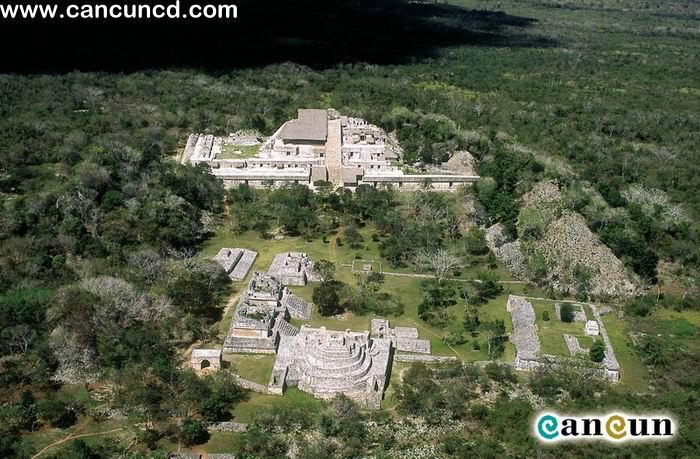
Chichen Itza was first populated between 500 and 900 AD by Mayans and for some reason abandoned around 900, the city was then resettled 100 years later and subsequently invaded by Toltecs from the North. There are numerous reliefs of both Mayan gods including Chac and the Toltec gods including Quetzacoatl. For some reason the city was abandoned around 1300. If the Spanish did not make it a policy to kill all of the Mayan priests and burn books when they arrived in Mexico, we would all have a few more answers. After the Classic period, the Maya migrated to the Yucat n peninsula. There they developed their own character, although their accomplishments and artwork are not considered as impressive as the Classic Maya. Most of the ruins you can see South of Cancun are from this time period and are definitely worth a visit. Chichen Itza (near Valladolid), Uxmal (near Merida) and Mayap n (west of Chichen Itza) were the three most important cities during the Post Classic period. They lived in relative peace from around 1000 - 1100 AD when Mayap n overthrew the confederation and ruled for over 200 years. In 1441 the Maya who had previously ruled Uxmal destroyed the city of Mayap n and founded a new city at Mani. Wars were fought between rival Mayan groups over the territory until the region was conquered by the Spanish.

Sunday, February 13, 2011

Maya - The lost civilization ( II )

Maya had a complex society (Classic period 300 - 900 AD)


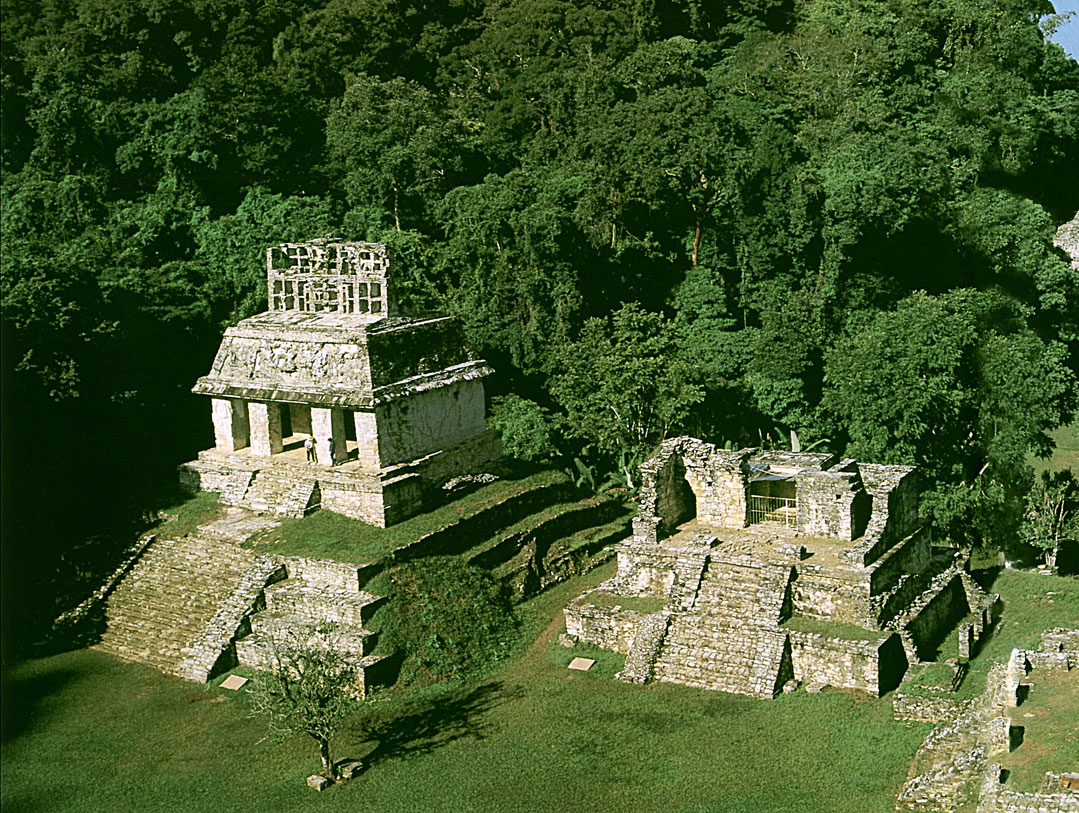
Most artistic and cultural achievement came about during the Classic period 300 - 900 AD. The Maya developed a complex, hierarchical society divided into classes and professions. Centralized governments, headed by a king, ruled territories with clearly defined boundaries. These borders changed as the various states lost and gained control over territory. Mayan centers flourished in Mexico, Guatemala, Belize, Honduras, and El Salvador. The major cities of the Classic period were Tikal (Guatemala), Palenque and Yaxchilan (Chiapas, Mexico), Cop n and Quirigua (Honduras). For most of this period, the majority of the Maya population lived in the central lowlands of Mexico and Belize. The Northern Yucatan (where present day Cancun is located) was sparsely populated for most of the Classic period with only a few cities such as Dzibilchaltun (near M rida) and Xpuhil, Bec n and Chicann (near Chetumal). During the 9th century the population centers of the central lowlands declined significantly. This decline was very rapid and is attributed to famine, drought, breakdowns in trade, and political fragmentation. Fragmentation from large states into smaller city-states focused resources on rivalries between cities including not just wars, but competitions of architecture and art between rival cities. As the cities in the lowlands declined, urban centers sprung up in the Northern Yucatan, including Uxmal (near M rida).
Anthropologists used to contrast the "peaceful" Maya with the bloodthirsty Aztecs of central Mexico. Although human sacrifice was not as important to the Maya as to the Aztec, blood sacrifice played a major role in their religion. Individuals offered up their blood, but not necessarily their lives, to the gods through painful methods using sharp instruments such as sting-ray spines or performed ritualistic self mutilation. It is probable that people of all classes shed their blood during religious rites. The king's blood sacrifice was the most valuable and took place more frequently. The Maya were warlike and raided their neighbors for land, citizens, and captives. Some captives were subjected to the double sacrifice where the victims heart was torn out for the sun and head cut off to pour blood out for the earth.
The Mayan civilization was the height of pre-Columbian culture. They made significant discoveries in science, including the use of the zero in mathematics. Their writing was the only in America capable of expressing all types of thought. Glyphs either represent syllables or whole concepts and were written on long strips of paper or carved and painted on stone. They are arranged to be red from left to right and top to bottom in pairs of columns. The Mayan calendar begins around 3114 BC, before Maya culture existed, and could measure time well into the future. They wrote detailed histories and used their calendar to predict the future and astrological events. Fray Diego de Landa, second bishop of the Yucat n ordered a mass destruction of Mayan books in 1562 and only three survived.

Friday, February 11, 2011

Maya - The lost civilization ( I )

The Maya are probably the best-known of the classical civilizations of Mesoamerica. Mayan history starts in the Yucatan around 2600 B.C., Mayan history rose to prominence around A.D. 250 in present-day southern Mexico, Guatemala, western Honduras, El Salvador, and northern Belize.
Building on the inherited inventions and ideas of earlier civilizations such as the Olmec, the Maya developed astronomy, calendrical systems and hieroglyphic writing. The Maya were noted as well for elaborate and highly decorated ceremonial architecture, including temple-pyramids, palaces and observatories, all built without metal tools. Mayan history shows that they were also skilled farmers, clearing large sections of tropical rain forest and, where groundwater was scarce, building sizeable underground reservoirs for the storage of rainwater. The Maya were equally skilled as weavers and potters, and cleared routes through jungles and swamps to foster extensive trade networks with distant peoples.
Many people believe that the ancestors of the Maya crossed the Bering Strait at least 20,000 years ago. They were nomadic hunter-gatherers. Evidence of settled habitation in Mexico is found in the Archaic period 5000-1500 BC - corn cultivation, basic pottery and stone tools.
The first true civilization was established with the rise of the Olmecs in the Pre-Classic period 1500 BC -300 AD. The Olmecs settled on the Gulf Coast, and little is known about them.
They are regarded as the inventors of many aspects of Meso-American cultures including the first calendar and hieroglyphic writing in the Western hemisphere. Archeologists have not settled the relationship between the Olmecs and the Maya, and it is a mystery whether the Maya were their descendants, trading partners, or had another relationship, that is white place in Mayan history.
It is agreed that the Maya developed a complex calendar and the most elaborate form of hieroglyphics in America, both based on the Olmec's versions.

Monday, February 07, 2011

The Croatoans and The Missing Roanoke Colony (II)


Missing Roanoke Island Colonists

Landing at Roanoke on August 18, 1590, White found the settlement deserted. The houses and fortifications had been dismantled in an orderly manner. The only clue was the word "Croatoan" carved into a post of the fort and "Cro" carved into a nearby tree. As there was no cross, White assumed they’d moved to Croatoan Island, but violent weather forced him to abort a search and the privateers refused to stay any longer – it was hurricane season. White was forced to return to Plymouth without a chance to so much as question the neighboring Croatoans.
In 1607, the Jamestown Colony sought information about the fate of the Roanoke Island colonists. One report indicated they took refuge with friendly Chesapeake Indians, but Chief Powhatan (a powerful Virginian tribal chief), claimed his warriors had attacked and killed most of the Roanoke colonists. Powhatan showed artifacts he claimed belonged to the colonists, including a musket barrel and a brass mortar.
In 1609, the Jamestown Colony received reports of English captives and sent search parties to no avail. Then in 1612, William Strachey, a secretary of the colony, wrote of Indian settlements at Peccarecanick and Ochanahoen having two-story houses with stone walls, a housing he was sure the lost Roanoke colonists had shown them.

Roanoke Colony Theories

Historian Lee Miller believes the Roanoke colonists were sold by a Wainoke tribe into slavery. Others believe the survivors were absorbed into the Croatoan tribe. Sadly, the most obvious fates cannot be ruled out - massacre or starvation though no bodies have been found.
In the late 1990s a group of climate researchers concluded the Roanoke colony had been established during the worst drought in more than 300 years.