Showing posts with label books. Show all posts

Friday, November 01, 2019

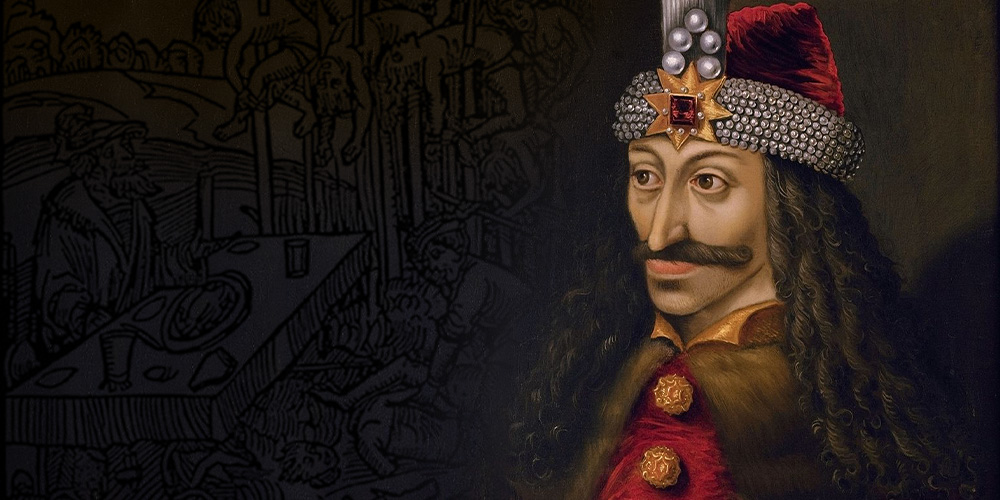
Dracula: Myth vs Reality - The True Story of Vlad the Impaler

  Dracula is one of the most fictional characters in the world. Almost everyone has heard terrifying stories about him during the childhood. horror tales have a strange way of staying with us, and among all the names that haunted our imagination as children, one stands out more than any other: Dracula.
  But Dracula is more than just a legend. Behind the myths lies a real historical figure - Vlad the Impaler, a strict and powerful ruler of a Romanian principality in the 15th century. Born on November 2, 1431, in Sighisoara, Transylvania, he ruled with an iron hand and became known for his brutal methods. Vlad died in 1476, at only 45 years of age, but his name survived long after his death. Over time, history, fear, and imagination transformed a real man into one of the darkest legends ever created.
   
The name Dracula comes from the word “Dracul”, a title associated with Vlad’s father, who was a member of the Order of the Dragon, a medieval brotherhood created to defend Christianity. While in modern Romanian the word drac is often linked to the idea of “devil,” at the time it symbolized the dragon and power.
Over the centuries, writers and storytellers reinterpreted this name and transformed its meaning. Vlad’s dark clothing, his severe appearance, and the fear he inspired contributed to the vampire image later popularized in literature. These elements, combined with folklore and imagination, shaped the legendary Dracula we recognize today.   
   Although Vlad the Impaler is often associated with extreme cruelty, historical records suggest a more complex reality. He ruled during a violent and unstable period, marked by constant threats from the Ottoman Empire and internal conflicts. Many of his harsh punishments were intended to impose order and deter crime rather than to inspire terror for its own sake. Over time, these acts were exaggerated and distorted, especially by foreign chroniclers who portrayed Vlad as a monster. These accounts played a significant role in shaping his dark reputation and later inspired fictional interpretations that blurred the line between fact and myth.
   In the late 19th century, the historical figure of Vlad the Impaler inspired one of the most influential works of gothic fiction. Irish writer Bram Stoker used the name Dracula and elements from Eastern European folklore to create the vampire count that would later define the genre. Although Stoker’s character shares little with the real Vlad in terms of personality or actions, the name and dark reputation provided the perfect foundation for a fictional monster. Through novels, films, and popular culture, Dracula evolved into a symbol of fear, immortality, and mystery — far removed from the man who once ruled a medieval land.
   

The story of Dracula is a powerful example of how history and imagination can merge. A real ruler, shaped by a violent era, became the foundation for one of the most enduring legends in human culture. Myth and reality may be different, but together they created a story that continues to fascinate the world.

Tuesday, February 15, 2011

Dracula - The Legend ( I )


Dracula – Beyond the Legend
» Bram Stoker’s inspiration
» Who was Vlad Dracula ?
We Draculs have a right to be proud…
I am the last of my kind

 – Dracula, from Bram Stoker’s Dracula
Some say that Transylvania sits on one of Earth's strongest magnetic fields and its people have extra-sensory perception. Vampires are believed to hang around crossroads on St. George's Day, April 23, and the eve of St. Andrew, November 29. The area is also home to Bram Stoker's Dracula, and it's easy to get caught up in the tale while driving along winding roads through dense, dark, ancient forests and over mountain passes.Tales of the supernatural had been circulating in Romanian folklore for centuries when Irish writer Bram Stoker picked up the thread and spun it into a golden tale of ghoulishness that has never been out of print since its first publication in 1897. To research his immortal tale, Stoker immersed himself in the history, lore and legends of Transylvania, which he called a “whirlpool for the imagination.”Count Dracula, a fictional character in the Dracula novel, was inspired by one of the best-known figures of Romanian history, Vlad Dracula, nicknamed Vlad Tepes (Vlad the Impaler), who was the ruler of Walachia at various times from 1456-1462. Born in 1431 in Sighisoara, he resided all his adult life in Walachia, except for periods of imprisonment at Pest and Visegrad (in Hungary).

Tracking Dracula

Although he never traveled to Romania, Stoker crammed his book with descriptions of many real locations that can still be visited in present-day Romania. They include the most important historical places associated with Vlad Tepes, such as the 14th century town of Sighisoara where you can visit the house in which Vlad was born (now hosting a restaurant and a small museum of medieval weapons).
Other Dracula sites include: the Old Princely Court (Palatul Curtea Veche) in Bucharest,Snagov Monastery, where, according to legend, Vlad’s remains were buried; the ruins of the Poenari Fortress (considered to be the authentic Dracula's Castle); the village of Arefu where Dracula legends are still told, the city of Brasov where Vlad led raids against the Saxons merchants, and, of course, Bran Castle.
Some tours also cover the folkloric aspects of the fictional Dracula. For instance, visitors can eat the exact meal Jonathan Harker ate at The Golden Crown in Bistrita and sleep at Castle Dracula Hotel, built no so long ago on the Borgo Pass at the approximate site of the fictional Count’s castle.


Wednesday, November 17, 2010

Books and Their Importance in Education and Society


The Importance of Books in Human History

Books have played a crucial role in the development of human civilization. Long before digital media, books were the primary means of preserving knowledge, culture, and historical memory. Through written texts, societies were able to transmit ideas, discoveries, and traditions across generations.

The importance of books lies not only in their ability to store information but also in their capacity to shape collective understanding. Many of the foundations of modern science, philosophy, and education were established through books that recorded and refined human thought over centuries.


Books as Sources of Knowledge and Education

Books remain one of the most reliable sources of structured knowledge. Unlike fragmented information found in short digital formats, books provide depth, context, and continuity. They allow readers to explore complex subjects in a systematic way, encouraging learning based on understanding rather than memorization.

In education, books serve as essential tools for developing literacy, critical reading skills, and comprehension. Academic progress in any field relies on access to well-documented and carefully written materials, most of which are found in books.


The Role of Books in Cultural Preservation

Books play an essential role in preserving culture, language, and identity. Literature reflects the values, beliefs, and experiences of societies, offering insight into different historical periods and cultural contexts. Without books, much of humanity’s cultural heritage would be lost.

Through books, readers gain access to perspectives beyond their own environment. This exposure promotes cultural awareness and helps maintain continuity between past and present generations.


Books in the Age of Technology

Despite the rapid growth of digital media, books continue to maintain their importance. While technology has changed how people access information, it has not replaced the value of books as comprehensive learning resources. Printed and digital books alike offer structured content that supports long-term understanding.

Rather than becoming obsolete, books have adapted to new formats while preserving their core function: providing reliable, in-depth knowledge. Their continued relevance demonstrates their unique role in education and intellectual development.


Why Books Remain Essential Today

Books encourage thoughtful engagement with ideas, offering readers the opportunity to reflect, analyze, and build informed opinions. In a world dominated by fast information and constant updates, books provide stability and depth.

The importance of books lies in their ability to educate, inform, and preserve knowledge in a way few other mediums can. They remain fundamental to education, culture, and the advancement of society.