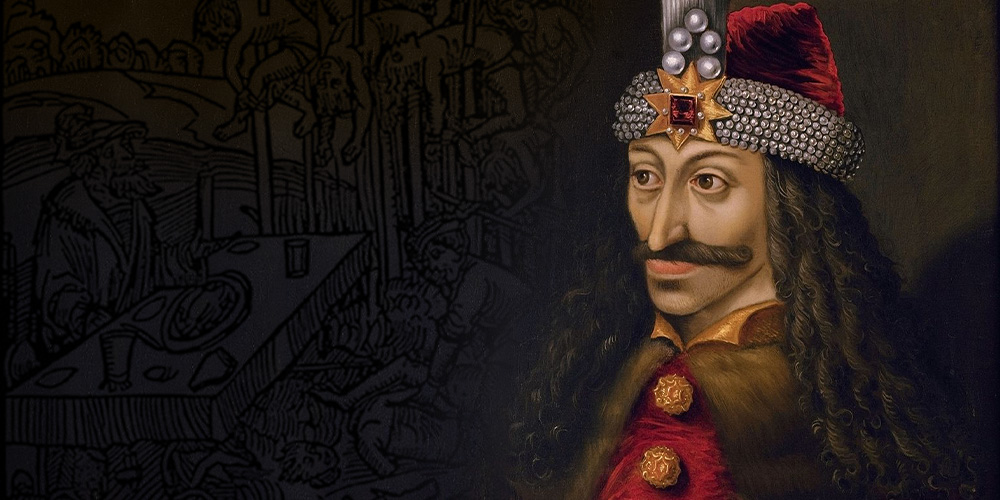
Dracula is one of the most fictional characters in the world. Almost everyone has heard terrifying stories about him during the childhood. horror tales have a strange way of staying with us, and among all the names that haunted our imagination as children, one stands out more than any other: Dracula.
But Dracula is more than just a legend. Behind the myths lies a real historical figure - Vlad the Impaler, a strict and powerful ruler of a Romanian principality in the 15th century. Born on November 2, 1431, in Sighisoara, Transylvania, he ruled with an iron hand and became known for his brutal methods. Vlad died in 1476, at only 45 years of age, but his name survived long after his death. Over time, history, fear, and imagination transformed a real man into one of the darkest legends ever created.
The name Dracula comes from the word “Dracul”, a title associated with Vlad’s father, who was a member of the Order of the Dragon, a medieval brotherhood created to defend Christianity. While in modern Romanian the word drac is often linked to the idea of “devil,” at the time it symbolized the dragon and power.Over the centuries, writers and storytellers reinterpreted this name and transformed its meaning. Vlad’s dark clothing, his severe appearance, and the fear he inspired contributed to the vampire image later popularized in literature. These elements, combined with folklore and imagination, shaped the legendary Dracula we recognize today.
Although Vlad the Impaler is often associated with extreme cruelty, historical records suggest a more complex reality. He ruled during a violent and unstable period, marked by constant threats from the Ottoman Empire and internal conflicts. Many of his harsh punishments were intended to impose order and deter crime rather than to inspire terror for its own sake. Over time, these acts were exaggerated and distorted, especially by foreign chroniclers who portrayed Vlad as a monster. These accounts played a significant role in shaping his dark reputation and later inspired fictional interpretations that blurred the line between fact and myth.
In the late 19th century, the historical figure of Vlad the Impaler inspired one of the most influential works of gothic fiction. Irish writer Bram Stoker used the name Dracula and elements from Eastern European folklore to create the vampire count that would later define the genre. Although Stoker’s character shares little with the real Vlad in terms of personality or actions, the name and dark reputation provided the perfect foundation for a fictional monster. Through novels, films, and popular culture, Dracula evolved into a symbol of fear, immortality, and mystery — far removed from the man who once ruled a medieval land.
The story of Dracula is a powerful example of how history and imagination can merge. A real ruler, shaped by a violent era, became the foundation for one of the most enduring legends in human culture. Myth and reality may be different, but together they created a story that continues to fascinate the world.

No comments:
Post a Comment