Thursday, January 15, 2026

Ted Bundy: The Charismatic Serial Killer Who Blamed Pornography for His Crimes

Basic Information

  • Born: 24 November 1946

  • Died: 24 January 1989

  • Birthplace: Burlington, Vermont

  • Name at birth: Theodore Robert Cowell

  • Known for: Confessing to the rape and murder of more than 20 young women


Who Was Ted Bundy?

Ted Bundy was one of the most notorious serial killers in American history. Clean-cut, articulate, and outwardly charming, he defied the public’s expectations of what a violent criminal looked like. Between 1974 and 1978, Bundy raped and murdered more than 20 young women, though the true number of victims is believed to be higher.

His crimes began in Washington State in 1974, at a time when he appeared to be leading a normal and respectable life.


A Double Life

During the early years of his killing spree, Bundy lived in the Seattle area, where he worked as a local Republican Party campaigner. Later, he moved to Salt Lake City, enrolling as a law student at the University of Utah.

Despite his involvement in politics and education, Bundy was abducting, assaulting, and murdering women—often exploiting their trust by appearing injured or harmless.


Arrest, Conviction, and Escape

Bundy was first arrested in 1975 during a traffic stop, when police discovered evidence linking him to a kidnapping in Utah and a murder in Colorado. While he was jailed in Utah, investigators in Washington and Colorado connected him to multiple disappearances and homicides.

In 1976, Bundy was convicted of kidnapping and sentenced to 15 years in prison. However, in late 1977, he escaped from custody and fled to Florida under the alias Chris Hagen.


The Florida Murders

Shortly after arriving in Tallahassee, Bundy attacked four women at a sorority house at Florida State University, killing two of them. Weeks later, he abducted, raped, and murdered a 12-year-old girl in Lake City, Florida.

His final arrest occurred when a Pensacola police officer stopped him for driving a stolen car, leading to his capture once again.


Trial, Confessions, and Execution

Bundy chose to represent himself during his murder trial, proclaiming his innocence. The televised proceedings shocked the public—many viewers struggled to believe that someone so calm, articulate, and normal-looking could be responsible for such brutality.

After being convicted and sentenced to death, Bundy began confessing to previously unsolved murders. He claimed that an “entity” inside him compelled him to rape and kill. In an attempt to delay his execution, he offered additional confessions, but the state of Florida proceeded with his sentence.

Ted Bundy was executed by electric chair on 24 January 1989.


Pornography Claim and Final Interview

On the eve of his execution, Bundy was interviewed by Christian media figure James Dobson. During the interview, Bundy claimed that an “addiction” to pornography had fueled his violent behavior—a statement widely debated and criticized by psychologists and criminologists.


Conclusion

Ted Bundy’s case remains a disturbing example of how charisma and appearance can mask extreme violence. His crimes reshaped criminal profiling and public awareness, proving that evil does not always appear monstrous.


Source: Infoplease

New Research Suggests Chronic Pain Drug Could Help Reverse Multiple Sclerosis Damage

Introduction

New scientific research suggests that a drug originally developed to treat chronic pain could one day help reverse damage caused by multiple sclerosis (MS). According to Linda Watkins, Distinguished Professor at the University of Colorado Center, this discovery opens a promising new direction for MS treatment.


Understanding Multiple Sclerosis

Multiple sclerosis is an inflammatory disease in which the body’s immune system attacks myelin, the protective sheath that surrounds nerves in the brain and spinal cord. As MS progresses, myelin develops lesions or scars that lead to permanent neurological damage, affecting movement, sensation, and cognitive function.

Until now, existing treatments have focused mainly on slowing disease progression rather than repairing the damage already done.


The Discovery of ATL313

Dr. Watkins and her colleagues from the Department of Psychology and Neuroscience discovered a compound called ATL313, initially developed to treat chronic pain. While previous assumptions suggested that such compounds would only reduce pain-related inflammation, the research revealed something unexpected.

Watkins explained that ATL313 does not merely slow multiple sclerosis—it appears to influence the disease at a deeper biological level.


How ATL313 Works

Approximately 70–80% of MS patients suffer from chronic pain, a condition that is often difficult or impossible to treat effectively. Originally, researchers believed that ATL313 would calm glial cells in the spinal cord, whose pro-inflammatory activation is known to cause pain.

“What we had originally thought about this class of compounds is that they would calm glial cells in the spinal cord because their pro-inflammatory activation is what causes pain,” Watkins stated.

Instead, the team discovered that ATL313 may reset glial cells, shifting them from an aggressive, inflammatory state to a calm, anti-inflammatory one. This change could potentially allow damaged lesions to heal—something previously thought impossible in MS treatment.


A Potential Breakthrough for MS Treatment

Although Dr. Watkins emphasized that the drug does not yet cure multiple sclerosis, the ability to influence lesion healing represents a major scientific breakthrough. If further studies confirm these findings, ATL313 could redefine how MS is treated in the future—not just slowing the disease, but repairing its damage.


Conclusion

This research highlights the unexpected potential of repurposing existing drugs to treat complex neurological diseases. While more studies are needed before ATL313 can be used clinically for MS, the discovery offers renewed hope for millions of patients worldwide.


Source: Science Centric

About Me: A Personal Reflection on Growth, Struggle, and Hope

Introduction

It is not easy to write something truly special about yourself. There was a time when I had clear dreams about the person I would become. Today, those dreams feel distant, almost forgotten. What remains, however, is everything I have learned along the way.

Since the age of twelve, life has taught me lessons that helped me survive—soul speaking—in a world that often feels harsh and unforgiving.


Lessons Learned Through Experience

I have learned many things, not from comfort, but from struggle. I am grateful even to those who, at certain moments, turned my life into something close to a living hell. Those experiences shaped me, tested me, and ultimately made me stronger.

Life continues to be a process of learning—about people around me and, just as importantly, about myself. Every encounter leaves a mark, whether visible or hidden.


Friendship, Support, and Moving Forward

There are moments when I feel as if time is running out, when the road ahead seems uncertain. Yet I am fortunate to have friends who help me move forward. Their presence gives me hope, strength, and the motivation to continue, especially when things feel overwhelming.

Support, in its simplest form, often makes the greatest difference.


The Simple Joys of Life

Perhaps this is not essential, but it is part of who I am: I love animals. I share my home with a cheerful Pekingese dog named Micky, who brings warmth and color into my daily life. His constant joy is a reminder that happiness often comes from the simplest places. Maybe one day I will write a special post about him.


Who I Am, In the End

Returning to myself, I realize there is no perfect definition. I love, I cry, I hate, I make mistakes, and I sin. But above all, I cannot live without the world around me—without people, emotions, and connection.

If you recognize yourself in any part of this story or have a similar experience to share, I invite you to leave a comment. Sometimes, our stories matter most when they are shared.


Tuesday, January 13, 2026

The History of Tattooing (Part III): Techniques, Technology, and Modern Identity

Introduction

After centuries of stigma and rebellion, tattooing entered a new phase shaped by technology and cultural acceptance: The History of Tattooing: Stigma, Control, and Rebellion.

Throughout history, tattooing has evolved not only in meaning but also in technique. From primitive tools made of bone and stone to modern electric machines, the methods used to mark the human body reflect both cultural beliefs and technological progress. In this final part of the series, we explore how tattooing techniques developed across time and how tattoos became a defining element of modern identity.


Traditional Tattooing Methods Across Cultures

Many indigenous cultures developed unique tattooing techniques using the materials available to them.

Native Americans used sharp tools similar to penknives, often soaked in ink, to cut the skin. Some Californian tribes applied pigments directly into these cuts to create permanent designs.

The Inuit practiced a different method: small holes were made in the skin using needles, after which a thin thread soaked in pigment was pulled beneath the surface. This stitching technique produced subtle yet lasting markings.

In New Zealand, members of the Maori tribe viewed the body as a living sculpture, similar to carved wood. Using bone knives, they incised the skin—especially on the face and buttocks—creating deep grooves into which pigment was poured. These markings were not merely decorative but carried genealogical and spiritual meaning. Through trade with Europeans, metal tools became available, allowing for more intricate and complex designs.


The Birth of the Modern Tattoo Machine

A major turning point in tattoo history occurred in 1891, when Samuel O'Reilly patented the first electric tattoo machine. His invention was based on an earlier typography device that used a rapidly vibrating needle.

O’Reilly’s machine allowed the needle to penetrate the skin at high speed, enabling ink to reach the correct depth with greater precision. This innovation made tattooing faster, cleaner, and more consistent, laying the foundation for modern tattoo artistry and professional studios.


Why Do People Wear Tattoos Today?

In contemporary society, tattoos are worn by people from all professions—lawyers, athletes, soldiers, mechanics—without the restrictions once imposed by social norms. Tattoos are no longer clear indicators of personality traits, criminal background, or social class.

Today, tattoos function primarily as expressions of identity, memory, aesthetics, and personal narrative. Understanding how tattoos originated helps explain why they have become such a widely accepted and meaningful form of self-expression.


Public Interest and Cultural Revival

Samuel O’Reilly is often regarded as the first modern tattoo artist. He opened a tattoo saloon in New York, which quickly gained popularity. Tattoos became fashionable until the financial crash of 1929, when economic hardship caused a decline in demand.

Interest in tattooing resurfaced during World War II, accompanied by new themes such as cartoon characters and patriotic symbols. The practice evolved further in the 1970s and 1980s, when musicians, actors, and other celebrities began openly displaying their tattoos in public.

In the last decade, tattoos have become truly ubiquitous, visible across cultures, age groups, and professions.


Conclusion

After more than 5,000 years of tradition, tattooing remains a powerful and evolving form of human expression. From carved skin and bone tools to electric machines and global trends, tattoos continue to adapt while preserving their cultural roots. There is nothing to suggest that tattooing will disappear—on the contrary, its ability to reinvent itself ensures its place in the future of art and identity.

For a complete perspective, you can revisit the origins of tattooing and the period of stigma and rebellion explored in the previous parts of this series:

The History of Tattooing (Part I): Ancient Origins and Cultural Meaning;

The History of Tattooing (Part II): Stigma, Control, and Rebellion


Monday, January 12, 2026

The History of Tattooing (Part II): Stigma, Control, and Rebellion

Introduction

To understand how tattoos reached this point, it is important to first explore their ancient origins and early cultural meanings: The History of Tattooing (Part I): Ancient Origins and Cultural Meaning

While ancient civilizations used tattoos for healing, status, and spiritual meaning, their role began to change dramatically with the rise of organized religion, centralized power, and modern states. Tattooing gradually shifted from a respected cultural practice to a symbol of marginalization, control, and rebellion.

This second part of the series explores how tattoos became stigmatized, criminalized, and later reclaimed—transforming from marks of punishment into signs of resistance and identity.


Tattooing and Religious Rejection

With the spread of Christianity in Europe, tattooing began to be viewed with suspicion. Religious authorities often associated permanent body markings with pagan rituals, heresy, or moral corruption. The body was increasingly seen as sacred and untouchable, created in the image of God, and altering it was interpreted as defiance against divine order.

As a result, tattooing slowly disappeared from mainstream European culture, surviving mainly in isolated communities, among sailors, or in regions less influenced by religious dogma.


Tattoos as Marks of Punishment and Ownership

From the late Middle Ages into the early modern period, tattoos and branding were widely used as tools of control. Criminals, prisoners, slaves, and deserters were often forcibly marked to indicate guilt, ownership, or social exclusion.

These marks stripped individuals of identity and dignity, reducing them to symbols of shame. Tattooing, once meaningful and voluntary, became associated with coercion, violence, and loss of freedom. This period played a major role in shaping the negative perception of tattoos that persisted for centuries.


Sailors, Soldiers, and Subcultures

Despite widespread stigma, tattooing never truly disappeared. Sailors and soldiers played a crucial role in preserving the practice. Traveling across continents, they encountered tattooed cultures in Polynesia, Asia, and the Americas, bringing these influences back to Europe.

For sailors, tattoos became symbols of protection, experience, survival, and belonging. Anchors, names, dates, and religious symbols marked journeys, losses, and hopes. These informal subcultures kept tattooing alive when it was otherwise socially unacceptable.


Criminalization and the Birth of Tattoo Stereotypes

By the 18th and 19th centuries, tattoos became strongly associated with prisons, gangs, and the lower classes. In many societies, visible tattoos were interpreted as signs of criminal behavior, violence, or moral failure.

This association reinforced stereotypes that still exist today. Tattooed individuals were often excluded from respectable professions and social circles, and tattooing itself was framed as a deviant or dangerous practice.


Rebellion, Identity, and the Turning Point

In the late 19th and early 20th centuries, tattoos slowly began to shift meaning again. What was once imposed as punishment became a deliberate act of rebellion. Choosing to be tattooed meant rejecting social norms, authority, and imposed identity.

Artists, performers, bikers, and countercultural movements embraced tattoos as symbols of individuality and resistance. Tattooing became a way to reclaim the body—to transform stigma into self-expression.


Conclusion

Part 2 reveals the darker chapter of tattoo history: a time when tattoos were used to control, punish, and exclude. Yet it is precisely through this oppression that tattooing gained new power. From forced marks to chosen symbols, tattoos evolved into tools of defiance and identity.

In Part 3, we will explore the modern era of tattooing—its psychological meanings, artistic evolution, and role in contemporary culture.

In the final part of this series, we will explore how tattooing evolved into a modern global art form through new techniques and technology: History of Tattooing (Part III): Techniques, Technology and Modern Identity

The History of Tattooing (Part I): Ancient Origins and Cultural Meaning

Introduction

Many times, we are fascinated by this form of art when we turn our heads and notice something unusual etched into someone’s skin. Tattoos often catch our attention instantly, yet there is much more behind them than simple aesthetics. Tattooing is an ancient art form, practiced across civilizations, carrying meanings that go far beyond decoration.

This article is Part 1 of a three-part series exploring tattooing—from its earliest origins to its cultural transformations and modern interpretations. Here, we begin at the very roots of tattooing: its ancient history and symbolic roles across early civilizations.

This article is the first part of a three-part series on tattooing, exploring how this practice later became stigmatized and transformed into a form of rebellion:

The Histpry of Tattooing (Part II): Stigma, Control, and Rebellion


Early Origins of Tattooing

For many years, scientists believed that the Egyptians and the Nubians were the first civilizations to practice tattooing. This theory changed in 1991, when a remarkably well-preserved mummy was discovered in the Alps. His name was Otzi: the Iceman, and he lived around 3300 B.C.

Otzi’s body revealed several sets of tattoos, including lines running from the knee to the ankle and markings on his back. Researchers believe these tattoos were not decorative but had a therapeutic purpose, possibly linked to pain relief or healing practices. This discovery pushed the origins of tattooing much further back in human history than previously thought.


Tattooing in Ancient Egypt and Cultural Expansion

During the Egyptian civilization—one of the most advanced cultures of its era—tattooing became more widespread. Through trade, diplomacy, and conquest, Egyptian dynasties established connections with other important cultures such as the Greeks, Persians, and Arabs. As a result, tattooing spread gradually across regions and civilizations.

By around 2200 B.C., the art of tattooing had reached South-East Asia, where it eventually became part of everyday cultural expression rather than a practice limited to elites or specific groups.


Japanese Tattoo Art and Aesthetic Evolution

Around the same period, the Japanese developed a strong interest in tattooing, primarily for its decorative value. Over time, Japan became home to some of the greatest tattoo artists in history. Their mastery of color, perspective, symbolism, and imagination transformed tattooing into a highly refined art form.

In the first millennium of our era, Japanese tattoo practices were influenced by Chinese forms and techniques. This fusion contributed to the unique style that later defined traditional Japanese tattoo art, giving tattooing a deeper visual and cultural meaning.


Tattooing in Europe and the Balkan Peninsula

In the Balkan Peninsula, tattoos served a very different purpose. According to Herodotus, the Thracians used tattoos as symbols of social status. The more tattoos a person had, the higher their position in society. In this context, tattooing was not only an art form but also a marker of identity and prestige.

Although Europeans were aware of tattoos, widespread interest appeared only after the Renaissance. The turning point came through contact with the Native Americans of North America, whose body art fascinated European explorers.


Polynesia, James Cook, and the European Rediscovery

The English explorer James Cook played a crucial role in introducing tattoo culture to Europe. During his expeditions in the Pacific, particularly in Polynesia, he encountered societies where tattooing held deep spiritual and social meaning. Upon his return, the practice began to spread across Europe.

At that time, marked bodies often symbolized ownership or belonging. Tattoos were sometimes associated with control, trade, or even the idea that a person could be treated as a commodity—used or sold like any other product.


Conclusion

From ancient healing rituals to symbols of power, identity, and artistic expression, tattooing has followed humanity throughout history. What we now perceive as a personal or aesthetic choice once carried meanings tied to survival, status, spirituality, and ownership. Understanding the origins of tattooing allows us to see this art not merely as ink on skin, but as a living archive of human culture and history.

In the next article, we examine how tattooing shifted from cultural tradition to social stigma and rebellion: The Histpry of Tattooing (Part II): Stigma, Control, and Rebellion


Saturday, January 03, 2026

📘 HAARP and Artificial Aurora – Full Series Guide


Science, Atmosphere, and Interpretation


🌐 Introduction

This page collects the complete HAARP and Artificial Aurora series — a scientific and cultural exploration of the HAARP research program and the ways in which it has been interpreted, misinterpreted, and mythologized.

The series explains the real science behind HAARP experiments, how scientists study the ionosphere, and why public perception often deviates from the underlying evidence. It is written in an educational, analytical style — not promoting conspiracies, but examining claims and responses in context.


📚 Complete Series (5 Parts)

🔹 Part I – HAARP and Artificial Aurora: The 2005 Alaska Experiment Explained

An overview of the High-frequency Active Auroral Research Program (HAARP), focusing on the 2005 experiment in Alaska that produced artificial auroral emissions and what it meant scientifically.


🔹 Part II – HAARP and Artificial Aurora: How Radio Waves Trigger Light in The Ionosphere

Explores how powerful radio waves interact with Earth's ionosphere to produce optical effects, and what scientific measurements reveal about these interactions.


🔹 Part III – HAARP and Artificial Aurora: Coincidences, Interpretations, and Public Reactions

Examines how unrelated or coincidental events become connected to HAARP in public narratives, and how interpretations can stray from established evidence.


🔹 Part IV – HAARP and Artificial Aurora: Claims, Controversies, and Scientific Limits

Analyzes claims and controversies surrounding HAARP, contrasting public speculation with scientific limitations and known research boundaries.


🔹 Part V – HAARP and Artificial Aurora: Patterns, Fear, and the Limits of Interpretation

Concludes the series by examining how fear, pattern-seeking, and media amplification influence interpretation of scientific programs like HAARP.


🧭 How to Read This Series

  • Part I is foundational — start here to understand the core science.

  • Part II expands on detailed ionospheric processes.

  • Parts III–IV address perception, narrative, controversy, and limits.

  • Part V ties together scientific understanding and social interpretation.

Each article stands on its own but also contributes to a broader understanding when read together.


⚖️ What This Series Is — and Is Not

This series is:

  • grounded in scientific explanation

  • critical in analysis of claims

  • focused on distinguishing evidence from speculation

This series is not:

  • a platform for unverified conspiracy theories

  • an endorsement of speculative claims

  • a sensationalist narrative

It aims to inform, not to alarm.


🔍 Conclusion

The HAARP program is an example of a complex scientific research effort that can be misunderstood when filtered through social, cultural, and media lenses. This series seeks to clarify the actual science and offer balanced insight into how public narratives form around scientific topics.


Tuesday, December 30, 2025

When Myths Meet Science: How Misunderstandings Shape Human History


    Throughout history, human beings have tried to explain the unknown using the tools available to them. Before modern science, these tools were often myth, religion, and oral tradition. Even after scientific methods emerged, myths did not disappear. Instead, they adapted, merged with new ideas, and sometimes resisted scientific explanation altogether.

    Many historical myths were not created out of ignorance, but out of necessity. When societies faced natural disasters, unexplained illnesses, or astronomical events, myth provided structure and meaning. Lightning became divine anger, eclipses became omens, and disease became punishment. These explanations helped people cope emotionally, even if they were factually incorrect.

    Science later challenged these interpretations, but the transition was rarely smooth. New discoveries often conflicted with deeply rooted beliefs, creating tension between tradition and evidence. The resistance to early scientific ideas—such as heliocentrism or germ theory—was not simply stubbornness. It was a fear of losing a worldview that had provided stability for generations.

    Interestingly, modern myths still emerge in scientifically advanced societies. Misunderstandings about technology, space, medicine, or climate often take myth-like forms. These modern myths spread not because people reject science entirely, but because complex information is difficult to process and easy narratives are comforting.

   History shows that myth and science are not strict opposites. Myths often preserve early observations, while science refines and corrects them. Understanding this relationship allows us to read historical sources more carefully and approach modern claims with both curiosity and skepticism.

    In the end, progress does not come from abandoning myth entirely, but from recognizing its role in shaping human thought—and knowing when evidence must take its place.

Monday, December 29, 2025

Pleiadian Warnings About Ozone Holes - Full Series Guide

                   Pleiadian Warnings About Ozone Holes - Complete Series Overview


  This guide brings together the full Pleiadian Warnings About Ozone Holes series, originally published in 2011, which explores early warnings , scientific observations, and long-term global implications related to ozone depletion and atmospheric changes.

   The series examines claims, data, and historical context surrounding ozone holes, destructive chemicals and environmental impact, while preserving the original sources and narrrative structure. 

    Below you can find all parts of the series, presented in reading order.


Part 1: Introduction and Early Warnings 

    This first part introduces the concept of ozone depletion and early warnings related to the changes in the ozone layer. It presents the historical background, initial scientific observations, and the context in which these warnings first appeared.

Recommended starting point for new readers.


Part 2: Atmospheric Changes and Destructive Chemicals

   Part two focuses on atmospheric processes , destructive chemical substances , and their role in the ozone belt degradation, It expands on mechanism, risks, and the growing awareness of environmental damage.


Part 3: Scientific Evidence and Global Impact

   The final part analyzes scientific interpretations , global consequences, and long-term implications of ozone depletion. It discusses evidence, international responses, and broader environmental effects.


Friday, November 01, 2019

Dracula: Myth vs Reality - The True Story of Vlad the Impaler

  Dracula is one of the most fictional characters in the world. Almost everyone has heard terrifying stories about him during the childhood. horror tales have a strange way of staying with us, and among all the names that haunted our imagination as children, one stands out more than any other: Dracula.
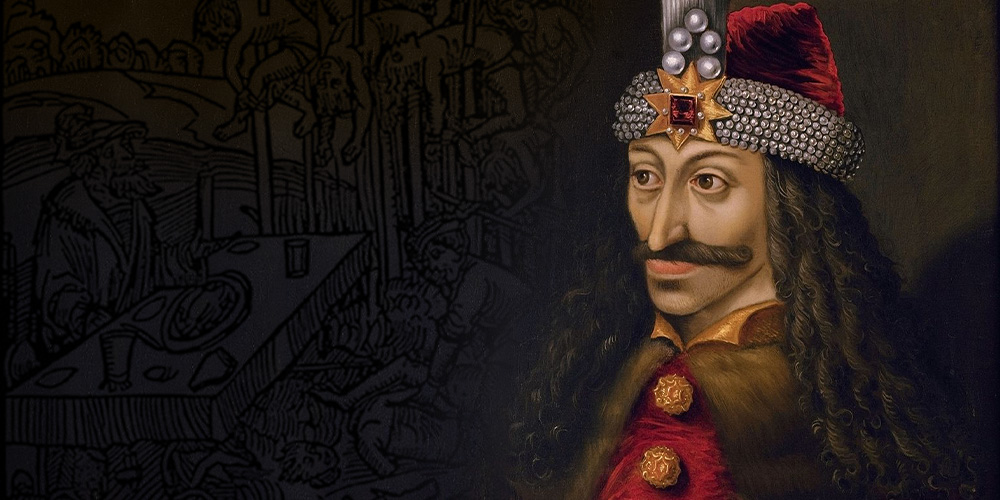
  But Dracula is more than just a legend. Behind the myths lies a real historical figure - Vlad the Impaler, a strict and powerful ruler of a Romanian principality in the 15th century. Born on November 2, 1431, in Sighisoara, Transylvania, he ruled with an iron hand and became known for his brutal methods. Vlad died in 1476, at only 45 years of age, but his name survived long after his death. Over time, history, fear, and imagination transformed a real man into one of the darkest legends ever created.
   
The name Dracula comes from the word “Dracul”, a title associated with Vlad’s father, who was a member of the Order of the Dragon, a medieval brotherhood created to defend Christianity. While in modern Romanian the word drac is often linked to the idea of “devil,” at the time it symbolized the dragon and power.
Over the centuries, writers and storytellers reinterpreted this name and transformed its meaning. Vlad’s dark clothing, his severe appearance, and the fear he inspired contributed to the vampire image later popularized in literature. These elements, combined with folklore and imagination, shaped the legendary Dracula we recognize today.   
   Although Vlad the Impaler is often associated with extreme cruelty, historical records suggest a more complex reality. He ruled during a violent and unstable period, marked by constant threats from the Ottoman Empire and internal conflicts. Many of his harsh punishments were intended to impose order and deter crime rather than to inspire terror for its own sake. Over time, these acts were exaggerated and distorted, especially by foreign chroniclers who portrayed Vlad as a monster. These accounts played a significant role in shaping his dark reputation and later inspired fictional interpretations that blurred the line between fact and myth.
   In the late 19th century, the historical figure of Vlad the Impaler inspired one of the most influential works of gothic fiction. Irish writer Bram Stoker used the name Dracula and elements from Eastern European folklore to create the vampire count that would later define the genre. Although Stoker’s character shares little with the real Vlad in terms of personality or actions, the name and dark reputation provided the perfect foundation for a fictional monster. Through novels, films, and popular culture, Dracula evolved into a symbol of fear, immortality, and mystery — far removed from the man who once ruled a medieval land.
   

The story of Dracula is a powerful example of how history and imagination can merge. A real ruler, shaped by a violent era, became the foundation for one of the most enduring legends in human culture. Myth and reality may be different, but together they created a story that continues to fascinate the world.

Saturday, May 18, 2013

Beyond the Myth of The Inquisition VII: Law, Secrecy, and the Birth of The Black Legend

This new society is the “conflict society” referred to above, the one gradually replacing the older medieval “convivencia.” The Inquisition must be understood in the broader terms of Spanish social history and the development of its institutions. The lack of perspective of earlier English Protestant propagandists or even modern Jewish apologists is insufficient, for it often had less to do with religion taken for itself than with politics and fratricidal rivalries. The papacy tried at times, and sometimes failed, to mitigate the effect of the Spanish Inquisition. Economics, too, played its part, especially when we recall that the inquisitors, forever in search of revenue, were usually paid out of their confiscations, not by a salary meted out by the crown from other sources or taxation. Until the themes of the evolution of Spanish “conflict society,” “closed society,” and “conservative xenophobia society,” are explored fully, and the Inquisition is not excised from the whole to be looked at in distorted isolation — and Kamen insists the work has just begun — we will not have an adequate appreciation of the phenomenon of the Inquisition. The word “appreciation” is operative, because it is a departure from the stereotype of The Black Legend. This is no mere revisionism, either. What can increasingly be understood and appreciated by specialists of Spanish history must be popularized to prevent it from becoming one of those “best kept secrets” of Church history or even world history.
While Henry Kamen is the type of historian who “tells the story” so the record can be clarified, Edward Peters is more concerned with The Black Legend aspect of the Spanish Inquisition. One of the reasons for the legend is the secrecy of the Inquisition when it came to procedures:
Judicially, the courts of the Inquisition were no worse and no better than the secular courts of the day. Faults existing in the procedure of the Holy Office would be no less evident in the royal courts where reforms were instituted by the famous Cortes of Toledo in 1480. The distinguishing feature of the Inquisition — its absolute secrecy — was the one which made it more open to abuses than any public tribunal. This secrecy was not, it seems, originally a part of the inquisitorial framework, and early records refer to public trials and a public prison rather than a secret one. But by the beginning of the sixteenth century secrecy became the general rule and was enforced in all the business of the tribunal. Even the various Instructions of the Inquisition, although set down in print, were for restricted circulation only and not for the public eye. What this necessarily involved was general public ignorance of the methods and procedure of the Inquisition — an ignorance which in its earlier period helped the tribunal by creating reverential fear in the minds of evildoers, but which in its later period led to the rise of fear and hatred based on a highly imaginative idea of how the tribunal worked. The Inquisition was therefore largely to blame for the unfounded slanders cast upon it in the eighteenth century or before. The natural outcome of this enforced ignorance is shown by the debates of the Cortes of Cadiz in 1813, on the projected decree to abolish the Inquisition. If the defenders of the tribunal relied on the argument of a mystical and mythical unity given to Spain by the Inquisition, its detractors relied almost completely on legendary misapprehensions about the entire structure and function of the institution.
 We see from this that the Inquisition, in a later age, was its own worst enemy and that it opened itself to misunderstanding precisely on grounds of procedure which had been secret, often to protect the witnesses who had come forward. For example, a sufficient number of them had been assassinated to warrant their protection, so thought the tribunals.
Edward Peters employs terminology which is useful for us in making distinctions: When I use the term inquisition (lower case), I address the function of institutions that were so called, as historical research has described them. When I use the term Inquisition (upper case) I always refer in shorthand to a particularly constituted, specific institution (such as the Spanish Inquisition or the Venetian Inquisition). When I use the term The Inquisition, I am referring in one form or another to an image, legend, or myth, usually in polemic. These decisions will not satisfy everyone, but they at least make an honest attempt to remove some of the dangerous presuppositions that often creep into even the most evenhanded attempts at historical neutrality.
  This article concludes the series "Beyond The Myths of Inquisition.

For the complete overview , reading order, and historical context, see the full guide.

Wednesday, April 24, 2013

Beyond the Myth of The Inquisition VI: Henry Kamen and Popular Support for the Inquisition

British historian Henry Arthur Francis Kamen has no apparent reason to defend the record of the Spanish Inquisition. He got his M.A. (Oxon.) in 1965, the same year he published his Spanish Inquisition. He specializes in Spanish history. Twenty years later he published another updated study on the Inquisition in the early modern period called Inquisition and Society in Spain.  Among the first things Kamen brings to our attention is that Llorente himself was astonished at the lack of any opposition to the Inquisition in Spain itself. This fact from the documentation can be interpreted variously, of course — were people just too afraid to speak out? But two additional facts are also necessary to consider. The first is that the civil variety of the Inquisition was a court alien to the older and more tolerant Spanish traditions and was introduced only in time of crisis. It was long unpopular in Aragon, for example, where local feudal freedoms from royal absolutism (“fueros”) resented its presence. Castilian inquisitors were also resented in Catalonia and elsewhere outside Castile, precisely because they were outsiders. But people can put up with just about anything when threatened with a crisis situation, and so the “early” Inquisition was tolerated, as were “later” ones when special crises obtained. Secondly, as noted above, it was supposed to be a temporary measure against judaizer-heretics who were then mainly the “converso” party of Jews (only later were ex-Muslims the object of the Inquisition) forced in 1391 and thereafter to be baptized or face exile or death. After the breakdown of the spirit of “convivencia,” the Old Christians actually feared for their blood lines, and so after 1480 tolerated the Inquisition at times more for the sake of “ethnic cleansing” than religious orthodoxy. All of this may be against our standards today, but it does have a precise understanding in Spanish social history. Here is what Kamen says of their tolerance. What did Spaniards themselves think of the Inquisition? There can be no doubt that the people as a whole gave their ready support to its existence. The tribunal was, after all, not a despotic body imposed on them tyrannically, but a logical expression of the social prejudices prevalent in their midst. It was created to deal with a problem of heresy, and as long as the problem was deemed to exist people seemed to accept it. The Inquisition was probably no more loved or hated than the police are in our time: in a society where there was no other general policing body, people took their grievances to it and exploited it to pay off personal scores. By the same token, it was on the receiving end of frequent hostility and resentment; but at every moment the inquisitors were convinced that the people were with them, and with good reason. Was Spain a closed or an open society? Kamen goes on to say these astonishing things. The image of Spain as a nation sunk in intellectual torpor and religious superstition, all of it due to the Inquisition, is one that Menendez Pelayo was right to controvert. Spain was in reality one of the freest nations in Europe, with active political institutions at all levels. Remarkably free discussion of political affairs was tolerated, and public controversy occurred on a scale paralleled in few other countries.
Let us not forget, either, that the works of Galileo were never put on the Spanish Index of Forbidden Books!
Anti-semitism after 1480 in Spain was local, and the monarchy continued, at least for a while, to be the traditional defender of the Jews, both those who remained Jews by religion and the “converso” communities. Kamen even points out that “converso” financing was partially responsible for outfitting the ships Columbus used to discover the New World. Many rich or famous “conversos” were never troubled by the Inquisition. Others lived abroad to avoid it, such as Juan Luis Vives. The pattern is an uneven one. It was widely held that almost the whole of the nobility had Jewish blood. By the seventeenth century, the limpieza statutes had actually closed some government and academic posts to the nobility, but by reason of blood, opened them to common people! An outdated Catholic publication (1931) states that the last victim of the Inquisition in Spain was a schoolmaster hanged in 1826. Some limpieza statutes lingered for a few more decades into the nineteenth century. We should note that the thoroughly enfeebled institution of the eighteenth and nineteenth centuries is hardly comparable to the one functioning under Ferdinand and Isabella at the close of the fifteenth century. “In rounded terms, it is likely that over three-quarters of all those who perished under the Inquisition in the three centuries of its existence, did so in the first twenty years.” This synthetic summary is the reasoned fruit of Henry Kamen’s painstaking analysis: The Inquisition was not the imposition of a sinister tyranny on an unwilling people. It was an institution brought into being by a particular socio-religious situation, impelled and inspired by a decisively Old Christian ideology, and controlled by men whose outlook reflected the mentality of the mass of Spaniards. The dissenters were a few intellectuals, and others whose blood alone was sufficient to put them outside the pale of the new society being erected on a basis of triumphant and militant conservatism.

For the complete overview , reading order, and historical context, see the full guide.

Sunday, April 21, 2013

Beyond the Myth of The Inquisition V: Historians, Sources, and the Survival of The Black Legend

The discovery of the riches of inquisitorial documentation, and its exploitation first by Llorente and then by Henry Charles Lea, has helped to restore the balance of information but has also created new dangers. Scholars are in danger of studying the Inquisition in isolation from all the other dimensions of State and society, as though the tribunal were somehow a self-explanatory phenomenon: as a result old misconceptions are being reinforced and the Inquisition is once again being assumed to have played a central role in religion, politics, culture and the economy. Thus both the primary sources and an adequate interpretation of them are required if we are to get beyond The Black Legend. Peters, assuming all of the above, tries to help us understand how the myth of the Inquisition has been so successfully recycled and revived by various interest groups down through history and in our own time. Llorente himself held high office in the Inquisition during his own day, and he was one of the few afrancesados or collaborators with the occupying French during the Napoleonic-era in Spain. This is Chadwick’s summary of his career: The most interesting of the afrancesados clergy was Juan Antonio Llorente (1756-1823). A canon of Calahorra, the French Revolution found him Secretary General of the Inquisition in Madrid, as a result of which the reforming grand inquisitor gave him important materials for a history of the Inquisition. In the events of 1808 he accepted King Joseph Bonaparte and entered Madrid in his train. As one of the few Spanish churchmen to be serviceable, he was now heaped with honours and responsible work, especially the dissolution of the monasteries and the administration of confiscated goods, as well as the custody of the archives of the Inquisition. He used the time to gather materials for his history. Naturally he must retreat with the French and spend ten years in exile until the Spanish government gave him a reprieve. In 1817-1818 he published at Paris in four volumes his Critical History of the Spanish Inquisition , which scandalized many Spaniards and finally gave the Spanish Inquisition the blasted reputation which it kept. The History was instantly put upon the Index of prohibited books. The account was not impartial history. But it was the only account hitherto by anyone who had access to authentic documents and therefore held the field as indispensable. In the perspective of Church history, and the reputation of Spanish Catholicism for bigotry and fanaticism, Llorente’s book was the most weighty single outcome of the little afrancesado movement among Churchmen. Very few Spanish clergy betrayed their country, so Llorente was the exception. But this is not what made him famous. It was his possession of the documentation on the Inquisition that earned him a reputation and thus made him important for us. He held the evidence. And his biased presentation held sway for lack of any countervailing influence.


For the complete overview , reading order, and historical context, see the full guide. 

Saturday, April 20, 2013

Beyond the Myth of The Inquisition IV: How The Spanish Inquisition Took Shape

After the original crisis, more significantly, it just happened that the Inquisition outlived its purpose and lingered on. Some have always insisted that at any time the Catholic Church could re-activate this institution which they allege rests on torture and the extraction of confessions by coercion, among other ugly features. Honest students of history regard this assertion as mere propaganda. Note the following secular source. Reginald Trevor Davies, author of The Golden Century of Spain, writes the following in his article in volume 21 of the Encyclopaedia Britannica. The Spanish church was wealthy and powerful because the people were intensely religious and because it was largely a national institution in which no foreigner might hold office and in which the crown was supreme (papal power having been reduced almost to the vanishing point). It was, consequently, a fact of serious political importance that during the anarchy of Henry IV’s reign (1454-1475) the Jews gained great power and influence. They might compel — sometimes by means of their usury — their debtors to renounce the Christian religion; and Marranos (baptized Jews) often preserved their old religious faith in secret. At the same time the power of the Moriscos (baptized Moors) had increased, and they were reviving ancient heresies such as the half-forgotten Manichaeism. The Catholic kings consequently consulted Pope Sixtus IV, who thereupon issued a bull (Nov. 1, 1478) authorizing them to choose two or three inquisitors notable for their virtue and learning, to whom he granted jurisdiction. The bull was put into force by a royal cedula (decree) issued in Medina del Campo (Sept. 17, 1480) ordering the establishment of the Holy Office in Castile. The original crisis was a real one. We can only regret that the “inquisitors notable for their virtue and learning” were not as often found to do the work as was originally intended by pope and king. If anything, inquisitors and their lesser employees (“familiars”) were more prone to pettiness, laziness, and greed, than to cruelty. Of these, greed was dominant. Church historians have been slow to study seriously this matter of the Inquisition. “Church history generally lagged behind other kinds of historical research, and confessional feelings still ran sufficiently high as to make the history of inquisitions a difficult and disputed topic.” Fortunately, all this has changed in our time, and three whose work is perhaps most helpful to us are not Catholics at all. Only one of them is a “church historian” properly speaking. Let us next look at the remarks of Owen Chadwick, and then continue with a more detailed presentation of the work of Henry Kamen, and Edward Peters, both already cited. No one could accuse any of these respected academics, the first two of them British, of any denominational pro-Catholic bias. Yet they show the Inquisition in a different light from that of the exaggerated misrepresentations the Spanish themselves call The Black Legend (La Leyenda Negra).

For the complete overview , reading order, and historical context, see the full guide.

Beyond the Myth of The Inquisition III: Conversos, Limpieza de Sangre, and Social Control in Spain

The Spanish institution of the Holy Office of the Inquisition, modelled after the original French, was intended to have been a more temporally limited politico-national project to deal with the problem of the “conversos” (“New Christians”). Some of them were indeed only feigning Christianity, sometimes because they had never been taught much about it, or because they belonged to “underground” communities that were scattered around the peninsula. It was the case in pre-Counter Reformation Spain that many rural and mountainous areas of the country were only superficially Christianized anyway, and gross ignorance was the norm for clergy and people. The judaizers tended to live in the cities, though, as did the Jews generally. The “false Christians” stirred up a dissent which alarmed the upholders of civic order, when church and state in an integral society were legally and psychologically inseparable. The Inquisition just sharpened old ethnic tensions, and did not invent them. They had long existed, despite “convivencia". Muslims and Jews did not fall under the jurisdiction of the Inquisition because they were not baptized. On the other hand:
All properly baptized persons, being ipso facto Christians and members of the Catholic Church, came under the jurisdiction of the Inquisition. Foreign heretics, therefore, appeared from time to time in autos held in Spain. The burning of Protestants at Seville in the mid-1500s shows a gradual increase in the number of foreigners seized, a natural phenomenon in an international seaport. The partly hidden issue was in effect racial, not doctrinal at all, because the Old Christian elite sometimes felt outdone by the New Christian elite. This whole topic was called limpieza de sangre (purity of blood). The notion of honor (more akin to what we might call “pride”) was also a cultural one, and honor went along with the lineage of being an Old Christian. Racialism grew, and Old Christians developed more and more anxiety about their own race. “Anti-semitism obviously existed, but the discriminatory statutes of limpieza did not begin to gather force until after the statute of Toledo in 1547.” It became a question of national security. The dark side of this racialism only served to weaken Spain, and by the seventeenth century considerable opposition had grown to the cult of limpieza. By the end of the fifteenth century, however, there were actually “new conversos” and “old conversos,” too, who further complicated this issue in Spanish society. Conversos were well-placed in Rome to lobby the papacy in their favor, and the practice on occasion worked out well for them. Popes regularly were in conflict with Spanish monarchs over these and other issues.

For the complete overview , reading order, and historical context, see the full guide.

Friday, April 19, 2013

Beyond The Myth Of The Inquisition II: Courts, Justice, and the Reality behind The Black Legend

But setting up a tribunal was nothing new, and the majority of dioceses had courts authorized by the bishops to judge a variety of cases and subjects according to canon law. Heresy was only one field of their inquiry; an “inquisition” was just a more particularized juridical entity akin to what we might call the office of “special prosecutor” today. For the most part no other judicial system existed other than the ecclesiastical, and it took centuries for the European secular state to emerge with its own totally separate system of law enforcement and justice. As a matter of fact, many inquisitors were laymen trained in law, and denunciations were routinely made by ordinary citizens, not special spies. The gothic image of the “mad monks” whose espionage network extended everywhere goes against the abundant authentic documentation we have available. The Inquisition was never as efficient as it would have liked to be, and as the decades wore on it became a sclerotic bureaucracy like any bureaucracy. It had always depended upon being itinerant, and when this ceased or was slowed down, even greater inefficiency ensued. As to the severity of the Inquisition, the following is informative for the contemporary reader: The proportionately small number of executions is an effective argument against the legend of a bloodthirsty tribunal. Nothing, certainly, can efface the horror of the first twenty holocaust years. Nor can occasional outbursts of savagery, such as overtook the Chuetas in the late seventeenth century, be minimized. But it is clear that for most of its existence the Inquisition was far from being a juggernaut of death either in intention or in capability. The figures given above for punishments in Valencia and Galicia suggest an execution rate of well under 2 per cent of the accused. It has been estimated that in the nineteen tribunals analysed above, the execution rate over the period 1540-1700 was 1.83 per cent for relaxations in person and 1.65 per cent for relaxations in effigy. If this is anywhere near the truth, it would seem that during the sixteenth and seventeenth centuries less than three people a year were executed by the Inquisition in the whole of the Spanish monarchy from Sicily to Peru — possibly a lower rate than in any provincial court of justice. A comparison, indeed, of secular courts and the Inquisition can only be in favor of the latter as far as rigour is concerned. In 1573, for instance, the corregidor of Plascencia handed over to the Holy Office in Llerena a Morisco condemned by his jurisdiction to be hanged and quartered for allegedly smashing an image of the Virgin, but the Inquisition found the case unproven and set him free. It must be remembered, of course, that although the death rate was low it was also heavily weighted against people of Jewish and Moorish origin. The relative frequency of burnings in the earlier years disappeared in the eighteenth century, and in the twenty-nine years of the reigns of Charles III and Charles IV only four people were burned.

For the complete overview , reading order, and historical context, see the full guide.

Thursday, April 18, 2013

Beyond The Myth of the Spanish Inquisition - Part I


Long did old-fashioned English Protestants and other anti-Catholics put their attention upon words such as “jesuitical,” “popish,” “jansenistic,” and “inquisitorial” in their polemics. But possibly the most odious, and the most successfully repromoted, is the idea of the hated Inquisition as the cruel tool of the Catholic Church to crush its enemies. By this means, especially for English-speakers, Catholic Spain was portrayed as the arch-enemy of all Protestantism. In the United States, whether it be the vulgarized Chick comics, or the sophisticated Ivy League intellectuals in 1960 who feared the Kennedy campaign, the Inquisition is generally assumed to be the Roman part of the triad denounced by clergyman Samuel Dickinson Burchard in 1884 in the famed expression “Rum, Romanism, and Rebellion.” American Know-Nothings and John Foxe’s Book of Martyrs constantly reprinted, or even the purveyors of the post-1968 sexual revolution or abortion-on-demand today, bring up the ghost of the Inquisition to suit their diverse purposes. But what do they know of its history? Are they aware the Inquisition was never primarily an anti-Protestant body, and that Philip II of Spain never had a consistently anti-Protestant foreign policy? Is it clear that most countries had their own equivalent structure for judging heresy, with no need to import anything similar from Spain, whether the would-be importer were Catholic or Protestant? How many remember that anti-Spanish feeling ran high in Italy where the Spanish Inquisition was ridiculed — and where Italian Catholics scorned the idea of racial purity? “It is one of the features of inquisitorial history that its practitioners have consistently failed to compare the Spanish Inquisition to comparable courts elsewhere in sixteenth-and seventeenth-century Europe.”Distinctions are still often not made between the Roman (and purely ecclesiastical) Inquisition, and the Spanish secular-ecclesiastical “dual” Inquisition whose famous administrator was the Dominican Tomás de Torquemada. His career as Grand Inquisitor (sole control was never his — he shared it with other “heads”) ended with his death in 1498, well before the advent of Luther and Calvin. Most often with no elucidating context, the Inquisition is assumed to be a weapon of the Catholic Church against all heretics, in whatever age, even though its somewhat mild ecclesiastical form was originally set up after 1232 to deal with the Cathars or Albigensians in late medieval France. Or, it is seen as the sole reason for the downfall of Spain itself in later centuries.


For the complete overview , reading order, and historical context, see the full guide.

Friday, November 04, 2011

Tornadoes - Nature's Most Violent Storms ( I )

Although tornadoes occur in many parts of the world, these destructive forces of nature are found most frequently in the United States east of the Rocky Mountains during the spring and summer months. In an average year, 800 tornadoes are reported nationwide, resulting in 80 deaths and over 1,500 injuries.
A tornado is a violently rotating column of air which descends from a thunderstorm to the ground. No other weather phenomenon can match the fury and destructive power of tornadoes. Tornadoes can be strong enough to destroy large buildings, leaving only the bare concrete foundation. In addition, they can lift 20-ton railroad cars from their tracks and they can drive straw and blades of grass into tree and telephone poles.
How do tornadoes form?
The truth is that scientists don't fully understand how tornadoes form. Typically, tornadoes develop several thousand feet above the earth's surface inside of a severe rotating thunderstorm. Thunderstorms develop in warm, moist air in advance of eastward-moving cold fronts. These thunderstorms often produce large hail, strong winds, and tornadoes. Tornadoes in the winter and early spring are often associated with strong, frontal systems that form in the Central States and move east. Occasionally, large outbreaks of tornadoes occur with this type of weather pattern. Several states may be affected by numerous severe thunderstorms and tornadoes.
During the spring in the Central Plains, thunderstorms frequently develop along a "dryline," which separates very warm, moist air to the east from hot, dry air to the west. Tornado-producing thunderstorms may form as the dryline moves east during the afternoon hours.
Along the front range of the Rocky Mountains, in the Texas panhandle, and in the southern High Plains, thunderstorms frequently form as air near the ground flows "upslope" toward higher terrain. If other favorable conditions exist, these thunderstorms can produce tornadoes.
Tornadoes occasionally accompany tropical storms and hurricanes that move over land. Tornadoes are most common to the right and ahead of the path of the storm center as it comes onshore.

Thursday, November 03, 2011

Elizabeth Bathory - The Blood Countess

Elizabeth (or 'Erzsebet') Bathory was born the daughter of George and Anna Bathory in 1560. Bathory spent most of her adult life at Castle Cachtice. Though the castle was mistakenly reported as being in Transylvania by Raymond T. McNally, it is actually located near the town of Vishine, just north-east of what is present day Bratislava (where Austria, Hungary, and the Slovak Republic come together).

Bathory grew up in an era when much of Hungary had been overrun by the Turkish forces of the Ottoman empire and was a battleground between Turkish and Austiran (Hapsburg) armies. The area was also split by religous differences. Her family sided with the new wave of Protestantism that opposed the traditional Romanian Catholisism. She was raised on the Bathory family estate at Ecsed in Transylvania. As a child Bathory was subject to seizures accompanied by intense rage and uncontrollable behavior.


Elizabeth became pregnant as the result of a brief affair with a peasant man in 1574. When her condition became evident, she was sequestereduntil the baby's birth, due to her engagement to Count Ferenc Nadasdy. They were married in May of 1575. Since Nadasdy was a soldier, he was frequently away for long periods of time. This left Bathory with the duties of managing the affairs of the Nadasdy family estate, Castle Sarvar. It was here that Elizabeth's career of evil truly began, with the disciplining of the large household staff, especially the young girls. 


In a time period in which cruel and arbitrary behavior by those in power toward those who were servants was common, Elizabeth's level of cruelty was noteworthy. She did not just punish infringements on her rules, but found excuses to inflict punishments and delighted in the torture and death of her victim's far beyond what her contemporaries could accept. She would stick pins in various sensitive body part, such as under the fingernails. In the winter she would execute victims by having them stripped, led out into the snow, and doused with water until they were frozen.


Bathory's husband joined in some of her sadistic behavior and actually taught his wife a some new varieties of punishment. For example, he showed her a summertime version of her freezing exercise - he had a woman stripped, covered with honey, then left outside to be bitten by numerous insects. He died in 1604, and Elizabeth moved to Vienna soon after his burial.


Amongst her numerous acts and tortures, the accusation that Bathory drained the blood of her victims and bathed in it was what earned her the title of a vampire. It is also noted that she occasionally bit the flesh of the girls during their torture. It is said that the reason Bathory bathed in blood was to retain her youthful looks and beauty, and she was, by all accounts, a most attractive woman.


All records of Elizabeth were sealed for more than a century, and her name was forbidden to be spoken in Hungarian society.


Unlike most females of the time, Elizabeth was well educated and her intelligence surpassed even some of the men of her time. Elizabeth was exceptional, becoming "fluent in Hungarian, Latin, and German... when most Hungarian nobles could not even spell or write... Even the ruling prince of Transylvania at the time was barely literate." Some modern scholars and contemporaries of hers postulated that she may have been insane, thus accounting for her seemingly inconceivable atrocities, but even a brief glance into her past reveals a person fully in control of her faculties.


In the summer of 1610 an official inquiry began concerning Elizabeth's actions. However, it was not vast number of her victim's that brought Bathory to court, but rather, political concerns instead. The crown hoped to escape from paying back a rather extensive loan that her husband had made to the king, as well as wishing to confiscate her land holdings, which were rather large as well.


On December 19, 1610, Bathory was arrested, and a few days later, placed on trial. The trial, mainly for show, was conducted by an agent of the king, Count Thurzo, it was initated not only for a conviction, but for the confiscation of her lands as well. One week following the first trial, on January 7, 1611, a second trail was convened.


During the second trail a register that had been retrieved from Elizabeth's living quarters was submitted as evidence. The register recorded the naes of 650 victims, all written in Bathory's handwriting. Bathory's accomplices were sentenced to be executed. The manner of their deaths was determined by thier roles in the tortures. Elizabeth herself was sentenced to life imprisonment in solitary confinement.

Bathroy was held in a room of her Cachtice castle. The room contained no windows of doors, only a few slits for air, and a small opening for food and water to be given to her. Elizabeth remained in confinement there until her death three years later on August 21, 1614. She was buried in the Bathory lands at Ecsed.


Dracula, created by the Irish author Bram Stoker, was based, albeit loosely, on the Romanian Prince, Vlad Dracula, the Impaler. Raymond T. McNally, who has written four books on the figure of Dracula in history, literature, and vampirism, in his fifth book, Dracula was a Woman, presents insights into the fact that Stoker's Count Dracula was also strongly influenced by the legends of Elizabeth Bathory of Hungary. Why, for example, make a Romanian Prince into a Hungarian Count? Why, if there are no accounts of Vlad Dracula drinking human blood, does blood drinking consume the Dracula of Stoker's novel, who, contrary to established vampire myth, seems to appear younger after doing so? The answers, of course, lie in examining the story of Countess Elizabeth Bathory.


It was largely Slovak servants whom Elizabeth killed, so the name "Csejthe" is only spoken in derision, and she is still called "The Hungarian Whore" in the area.