Tuesday, December 30, 2025

When Myths Meet Science: How Misunderstandings Shape Human History


    Throughout history, human beings have tried to explain the unknown using the tools available to them. Before modern science, these tools were often myth, religion, and oral tradition. Even after scientific methods emerged, myths did not disappear. Instead, they adapted, merged with new ideas, and sometimes resisted scientific explanation altogether.

    Many historical myths were not created out of ignorance, but out of necessity. When societies faced natural disasters, unexplained illnesses, or astronomical events, myth provided structure and meaning. Lightning became divine anger, eclipses became omens, and disease became punishment. These explanations helped people cope emotionally, even if they were factually incorrect.

    Science later challenged these interpretations, but the transition was rarely smooth. New discoveries often conflicted with deeply rooted beliefs, creating tension between tradition and evidence. The resistance to early scientific ideas—such as heliocentrism or germ theory—was not simply stubbornness. It was a fear of losing a worldview that had provided stability for generations.

    Interestingly, modern myths still emerge in scientifically advanced societies. Misunderstandings about technology, space, medicine, or climate often take myth-like forms. These modern myths spread not because people reject science entirely, but because complex information is difficult to process and easy narratives are comforting.

   History shows that myth and science are not strict opposites. Myths often preserve early observations, while science refines and corrects them. Understanding this relationship allows us to read historical sources more carefully and approach modern claims with both curiosity and skepticism.

    In the end, progress does not come from abandoning myth entirely, but from recognizing its role in shaping human thought—and knowing when evidence must take its place.

Monday, December 29, 2025

Pleiadian Warnings About Ozone Holes - Full Series Guide

                   Pleiadian Warnings About Ozone Holes - Complete Series Overview


  This guide brings together the full Pleiadian Warnings About Ozone Holes series, originally published in 2011, which explores early warnings , scientific observations, and long-term global implications related to ozone depletion and atmospheric changes.

   The series examines claims, data, and historical context surrounding ozone holes, destructive chemicals and environmental impact, while preserving the original sources and narrrative structure. 

    Below you can find all parts of the series, presented in reading order.


Part 1: Introduction and Early Warnings 

    This first part introduces the concept of ozone depletion and early warnings related to the changes in the ozone layer. It presents the historical background, initial scientific observations, and the context in which these warnings first appeared.

Recommended starting point for new readers.


Part 2: Atmospheric Changes and Destructive Chemicals

   Part two focuses on atmospheric processes , destructive chemical substances , and their role in the ozone belt degradation, It expands on mechanism, risks, and the growing awareness of environmental damage.


Part 3: Scientific Evidence and Global Impact

   The final part analyzes scientific interpretations , global consequences, and long-term implications of ozone depletion. It discusses evidence, international responses, and broader environmental effects.


Friday, November 01, 2019

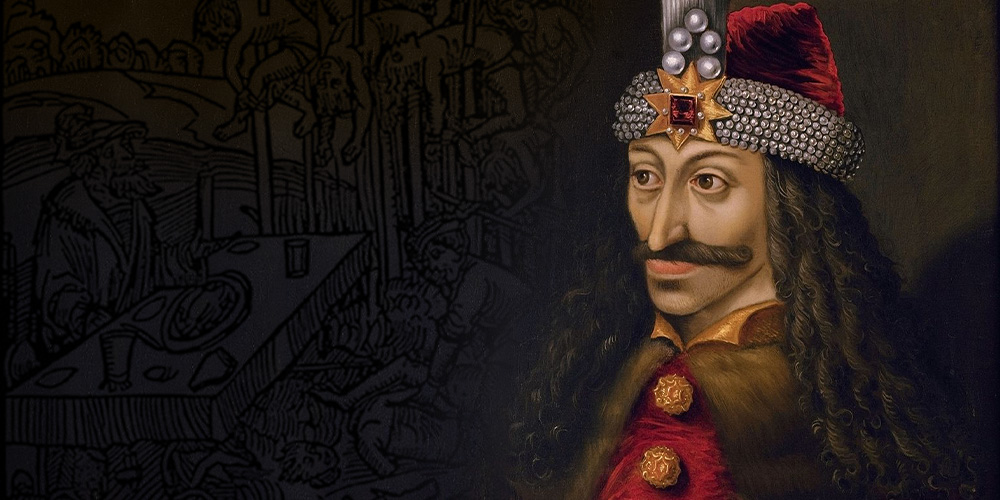
Dracula: Myth vs Reality - The True Story of Vlad the Impaler

  Dracula is one of the most fictional characters in the world. Almost everyone has heard terrifying stories about him during the childhood. horror tales have a strange way of staying with us, and among all the names that haunted our imagination as children, one stands out more than any other: Dracula.
  But Dracula is more than just a legend. Behind the myths lies a real historical figure - Vlad the Impaler, a strict and powerful ruler of a Romanian principality in the 15th century. Born on November 2, 1431, in Sighisoara, Transylvania, he ruled with an iron hand and became known for his brutal methods. Vlad died in 1476, at only 45 years of age, but his name survived long after his death. Over time, history, fear, and imagination transformed a real man into one of the darkest legends ever created.
   
The name Dracula comes from the word “Dracul”, a title associated with Vlad’s father, who was a member of the Order of the Dragon, a medieval brotherhood created to defend Christianity. While in modern Romanian the word drac is often linked to the idea of “devil,” at the time it symbolized the dragon and power.
Over the centuries, writers and storytellers reinterpreted this name and transformed its meaning. Vlad’s dark clothing, his severe appearance, and the fear he inspired contributed to the vampire image later popularized in literature. These elements, combined with folklore and imagination, shaped the legendary Dracula we recognize today.   
   Although Vlad the Impaler is often associated with extreme cruelty, historical records suggest a more complex reality. He ruled during a violent and unstable period, marked by constant threats from the Ottoman Empire and internal conflicts. Many of his harsh punishments were intended to impose order and deter crime rather than to inspire terror for its own sake. Over time, these acts were exaggerated and distorted, especially by foreign chroniclers who portrayed Vlad as a monster. These accounts played a significant role in shaping his dark reputation and later inspired fictional interpretations that blurred the line between fact and myth.
   In the late 19th century, the historical figure of Vlad the Impaler inspired one of the most influential works of gothic fiction. Irish writer Bram Stoker used the name Dracula and elements from Eastern European folklore to create the vampire count that would later define the genre. Although Stoker’s character shares little with the real Vlad in terms of personality or actions, the name and dark reputation provided the perfect foundation for a fictional monster. Through novels, films, and popular culture, Dracula evolved into a symbol of fear, immortality, and mystery — far removed from the man who once ruled a medieval land.
   

The story of Dracula is a powerful example of how history and imagination can merge. A real ruler, shaped by a violent era, became the foundation for one of the most enduring legends in human culture. Myth and reality may be different, but together they created a story that continues to fascinate the world.

Saturday, May 18, 2013

Beyond the Myth of The Inquisition VII: Law, Secrecy, and the Birth of The Black Legend

This new society is the “conflict society” referred to above, the one gradually replacing the older medieval “convivencia.” The Inquisition must be understood in the broader terms of Spanish social history and the development of its institutions. The lack of perspective of earlier English Protestant propagandists or even modern Jewish apologists is insufficient, for it often had less to do with religion taken for itself than with politics and fratricidal rivalries. The papacy tried at times, and sometimes failed, to mitigate the effect of the Spanish Inquisition. Economics, too, played its part, especially when we recall that the inquisitors, forever in search of revenue, were usually paid out of their confiscations, not by a salary meted out by the crown from other sources or taxation. Until the themes of the evolution of Spanish “conflict society,” “closed society,” and “conservative xenophobia society,” are explored fully, and the Inquisition is not excised from the whole to be looked at in distorted isolation — and Kamen insists the work has just begun — we will not have an adequate appreciation of the phenomenon of the Inquisition. The word “appreciation” is operative, because it is a departure from the stereotype of The Black Legend. This is no mere revisionism, either. What can increasingly be understood and appreciated by specialists of Spanish history must be popularized to prevent it from becoming one of those “best kept secrets” of Church history or even world history.
While Henry Kamen is the type of historian who “tells the story” so the record can be clarified, Edward Peters is more concerned with The Black Legend aspect of the Spanish Inquisition. One of the reasons for the legend is the secrecy of the Inquisition when it came to procedures:
Judicially, the courts of the Inquisition were no worse and no better than the secular courts of the day. Faults existing in the procedure of the Holy Office would be no less evident in the royal courts where reforms were instituted by the famous Cortes of Toledo in 1480. The distinguishing feature of the Inquisition — its absolute secrecy — was the one which made it more open to abuses than any public tribunal. This secrecy was not, it seems, originally a part of the inquisitorial framework, and early records refer to public trials and a public prison rather than a secret one. But by the beginning of the sixteenth century secrecy became the general rule and was enforced in all the business of the tribunal. Even the various Instructions of the Inquisition, although set down in print, were for restricted circulation only and not for the public eye. What this necessarily involved was general public ignorance of the methods and procedure of the Inquisition — an ignorance which in its earlier period helped the tribunal by creating reverential fear in the minds of evildoers, but which in its later period led to the rise of fear and hatred based on a highly imaginative idea of how the tribunal worked. The Inquisition was therefore largely to blame for the unfounded slanders cast upon it in the eighteenth century or before. The natural outcome of this enforced ignorance is shown by the debates of the Cortes of Cadiz in 1813, on the projected decree to abolish the Inquisition. If the defenders of the tribunal relied on the argument of a mystical and mythical unity given to Spain by the Inquisition, its detractors relied almost completely on legendary misapprehensions about the entire structure and function of the institution.
 We see from this that the Inquisition, in a later age, was its own worst enemy and that it opened itself to misunderstanding precisely on grounds of procedure which had been secret, often to protect the witnesses who had come forward. For example, a sufficient number of them had been assassinated to warrant their protection, so thought the tribunals.
Edward Peters employs terminology which is useful for us in making distinctions: When I use the term inquisition (lower case), I address the function of institutions that were so called, as historical research has described them. When I use the term Inquisition (upper case) I always refer in shorthand to a particularly constituted, specific institution (such as the Spanish Inquisition or the Venetian Inquisition). When I use the term The Inquisition, I am referring in one form or another to an image, legend, or myth, usually in polemic. These decisions will not satisfy everyone, but they at least make an honest attempt to remove some of the dangerous presuppositions that often creep into even the most evenhanded attempts at historical neutrality.
  This article concludes the series "Beyond The Myths of Inquisition.

For the complete overview , reading order, and historical context, see the full guide.

Wednesday, April 24, 2013

Beyond the Myth of The Inquisition VI: Henry Kamen and Popular Support for the Inquisition

British historian Henry Arthur Francis Kamen has no apparent reason to defend the record of the Spanish Inquisition. He got his M.A. (Oxon.) in 1965, the same year he published his Spanish Inquisition. He specializes in Spanish history. Twenty years later he published another updated study on the Inquisition in the early modern period called Inquisition and Society in Spain.  Among the first things Kamen brings to our attention is that Llorente himself was astonished at the lack of any opposition to the Inquisition in Spain itself. This fact from the documentation can be interpreted variously, of course — were people just too afraid to speak out? But two additional facts are also necessary to consider. The first is that the civil variety of the Inquisition was a court alien to the older and more tolerant Spanish traditions and was introduced only in time of crisis. It was long unpopular in Aragon, for example, where local feudal freedoms from royal absolutism (“fueros”) resented its presence. Castilian inquisitors were also resented in Catalonia and elsewhere outside Castile, precisely because they were outsiders. But people can put up with just about anything when threatened with a crisis situation, and so the “early” Inquisition was tolerated, as were “later” ones when special crises obtained. Secondly, as noted above, it was supposed to be a temporary measure against judaizer-heretics who were then mainly the “converso” party of Jews (only later were ex-Muslims the object of the Inquisition) forced in 1391 and thereafter to be baptized or face exile or death. After the breakdown of the spirit of “convivencia,” the Old Christians actually feared for their blood lines, and so after 1480 tolerated the Inquisition at times more for the sake of “ethnic cleansing” than religious orthodoxy. All of this may be against our standards today, but it does have a precise understanding in Spanish social history. Here is what Kamen says of their tolerance. What did Spaniards themselves think of the Inquisition? There can be no doubt that the people as a whole gave their ready support to its existence. The tribunal was, after all, not a despotic body imposed on them tyrannically, but a logical expression of the social prejudices prevalent in their midst. It was created to deal with a problem of heresy, and as long as the problem was deemed to exist people seemed to accept it. The Inquisition was probably no more loved or hated than the police are in our time: in a society where there was no other general policing body, people took their grievances to it and exploited it to pay off personal scores. By the same token, it was on the receiving end of frequent hostility and resentment; but at every moment the inquisitors were convinced that the people were with them, and with good reason. Was Spain a closed or an open society? Kamen goes on to say these astonishing things. The image of Spain as a nation sunk in intellectual torpor and religious superstition, all of it due to the Inquisition, is one that Menendez Pelayo was right to controvert. Spain was in reality one of the freest nations in Europe, with active political institutions at all levels. Remarkably free discussion of political affairs was tolerated, and public controversy occurred on a scale paralleled in few other countries.
Let us not forget, either, that the works of Galileo were never put on the Spanish Index of Forbidden Books!
Anti-semitism after 1480 in Spain was local, and the monarchy continued, at least for a while, to be the traditional defender of the Jews, both those who remained Jews by religion and the “converso” communities. Kamen even points out that “converso” financing was partially responsible for outfitting the ships Columbus used to discover the New World. Many rich or famous “conversos” were never troubled by the Inquisition. Others lived abroad to avoid it, such as Juan Luis Vives. The pattern is an uneven one. It was widely held that almost the whole of the nobility had Jewish blood. By the seventeenth century, the limpieza statutes had actually closed some government and academic posts to the nobility, but by reason of blood, opened them to common people! An outdated Catholic publication (1931) states that the last victim of the Inquisition in Spain was a schoolmaster hanged in 1826. Some limpieza statutes lingered for a few more decades into the nineteenth century. We should note that the thoroughly enfeebled institution of the eighteenth and nineteenth centuries is hardly comparable to the one functioning under Ferdinand and Isabella at the close of the fifteenth century. “In rounded terms, it is likely that over three-quarters of all those who perished under the Inquisition in the three centuries of its existence, did so in the first twenty years.” This synthetic summary is the reasoned fruit of Henry Kamen’s painstaking analysis: The Inquisition was not the imposition of a sinister tyranny on an unwilling people. It was an institution brought into being by a particular socio-religious situation, impelled and inspired by a decisively Old Christian ideology, and controlled by men whose outlook reflected the mentality of the mass of Spaniards. The dissenters were a few intellectuals, and others whose blood alone was sufficient to put them outside the pale of the new society being erected on a basis of triumphant and militant conservatism.

For the complete overview , reading order, and historical context, see the full guide.